Why Summer Is One of the Most Stressful Times for a Water Heater in Sarasota
Summer is one of the most inconvenient times for a water heater failure because high humidity, increased household water use, and Florida's hard water conditions can place additional stress on aging systems. Water heaters in Sarasota, Venice, Bradenton, and North Port face a combination of challenges from June through September that can contribute to wear and increase the likelihood of problems in aging systems.
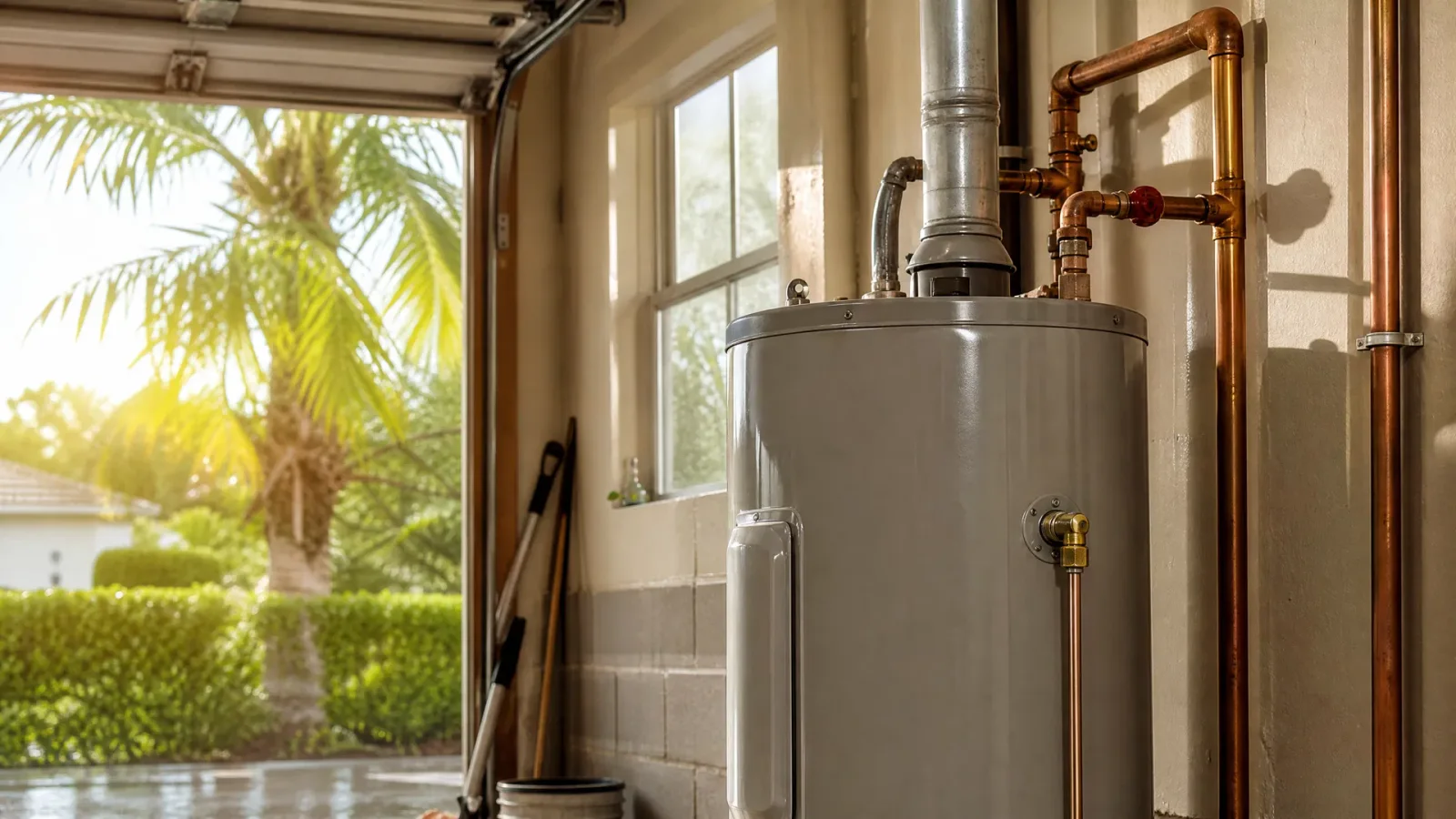
Unlike many northern states where water heaters are located in basements, Sarasota-area water heaters are commonly installed in garages, exposing them to higher ambient temperatures, humidity, and occasional storm-related flooding. This prolonged exposure can accelerate wear on water heater components and electrical controls, especially in older units. Combined with Sarasota's mineral-rich water, the result is a system that may be working harder than it should, often without any visible warning signs until a failure occurs.
The good news: an annual maintenance visit at the start of the season can help identify many common issues before they lead to a summer breakdown. Understanding these common summer water heater problems can help homeowners determine when routine maintenance is sufficient and when professional water heater repair in Sarasota may be needed.
How Does Sarasota's Hard Water Damage Water Heaters?
Many areas of Sarasota and Manatee Counties have moderately hard to hard water, which can contribute to mineral buildup inside water heaters. When hard water is heated, dissolved calcium carbonate precipitates out of solution and settles as white, chalky sediment on the bottom of the tank and on electric heating elements.
This sediment layer acts as an insulator, forcing the heating element to work harder and longer to heat the same volume of water. The compounding effects include:
- Higher energy bills: Sediment buildup can reduce efficiency, increase operating costs, and shorten equipment life.
- Popping or rumbling sounds: The characteristic "popcorn" sound from a water heater is steam bubbling through the sediment layer, a sign the unit is overworking.
- Premature tank failure: Sediment traps heat at the bottom of the tank, creating localized overheating that can damage protective linings and accelerate corrosion of the steel tank.
- Reduced hot water capacity: Significant sediment accumulation displaces water volume and reduces the amount of usable hot water the tank can deliver.
A properly sized water softener can significantly reduce scale buildup and help extend water heater life. Pro-Plumbing Works installs whole-home water filtration and softener systems throughout Sarasota and Manatee Counties.
In Sarasota and Manatee Counties, water heaters installed in garages face higher ambient temperatures, humidity, and occasional storm-related flooding, conditions that can accelerate wear on components and electrical controls, especially in units over 8 years old.
What Are the Warning Signs of a Failing Water Heater in Summer?
Sarasota homeowners should watch for these specific indicators between June and September:
Discolored or rusty water is one of the most urgent warning signs. Rust-colored hot water may indicate internal corrosion within the water heater and should be evaluated by a licensed plumber as soon as possible. In some cases, the cause may be a failing anode rod, galvanized piping, or localized corrosion rather than full tank failure - a professional inspection will determine the appropriate course of action.
Inconsistent water temperature, particularly water that is hot for 2 to 3 minutes and then drops to lukewarm, often indicates a failed lower heating element on electric units. This is one of the most common reasons homeowners call for water heater repair in Sarasota. On gas water heaters, similar symptoms may indicate burner, thermostat, or ignition-related problems. In summer, this symptom is frequently misattributed to high demand when the actual cause is component failure.
Water pooling around the base of the unit should be inspected immediately. The source is not always the tank itself - T&P valve discharge, condensation, fitting leaks, and expansion tank leaks can all produce similar pooling. If the tank itself is leaking, replacement is typically the only solution.
Noisy operation, rotten-egg smell, or a noticeably higher electric bill are additional warning signs that warrant a professional inspection before the problem escalates.
Age over 10 years combined with any of the above symptoms may indicate that replacement is becoming more cost-effective than repair, particularly if multiple components are showing signs of wear.
How Often Should a Water Heater Be Flushed in Sarasota?
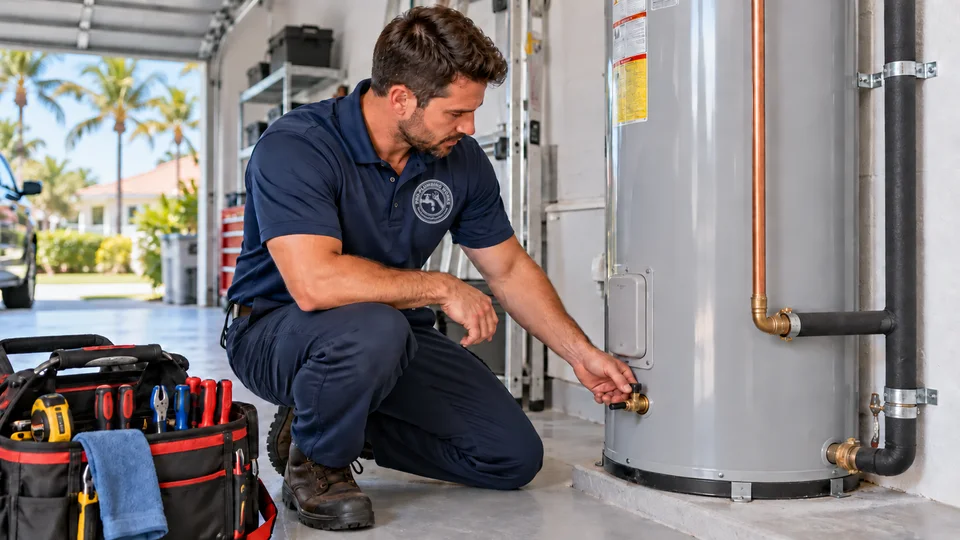
In Sarasota and Manatee Counties, Pro-Plumbing Works recommends flushing a tank-style water heater once per year - ideally at the start of summer, before the heat peaks. The flushing process removes accumulated sediment from the tank floor, restoring efficiency and extending the unit's service life.
The process involves connecting a garden hose to the drain valve at the base of the tank, turning off the cold water supply, and allowing the tank to drain fully while the sediment is flushed out. On units that have not been flushed in several years, the drain valve itself is often corroded or clogged with sediment - a situation that requires professional service to resolve safely.
We check the anode rod’s age and let you know if it is due for replacement. The anode helps protect many steel tanks from corrosion.
Pro Tip: Schedule your annual water heater flush at the start of summer - before the heat peaks and before hurricane season demand fills up licensed plumbers' schedules. Call 941-894-1127 or request a free estimate online.
Hurricane Season and Your Water Heater
Florida homeowners face a challenge that most of the country does not: extended power outages during hurricane season. For homes with electric water heaters, a multi-day outage can leave the household without hot water for days at a time. Homeowners should inspect aging water heaters before storm season begins and consider whether the unit's age and condition make it a replacement priority before a storm, not after.
Floor-standing tank water heaters are also more vulnerable to flood damage than wall-mounted units. If your water heater is located in a garage or utility area that has flooded in the past, this is worth discussing with a licensed plumber when planning any replacement or upgrade.
For a complete pre-storm plumbing checklist - including how to shut off your water heater, test your T&P relief valve, and inspect your backflow preventer before a hurricane - see our Hurricane Season Plumbing Checklist for Sarasota Homeowners.
Expansion Tanks: A Florida Requirement Many Homeowners Miss
Many newer Florida homes with closed plumbing systems require thermal expansion control, often in the form of an expansion tank. When a home has a closed plumbing system - common with pressure-reducing valves or backflow preventers - heated water has nowhere to expand safely, which can put pressure on the water heater tank and reduce its lifespan.
If your home has a closed plumbing system and your water heater does not have an expansion tank, this is worth addressing during your next service visit. Pro-Plumbing Works evaluates expansion tank requirements as part of every water heater installation and replacement.
Is a Tankless Water Heater Better for Sarasota's Climate?
Tankless water heaters (on-demand) offer meaningful advantages for Sarasota homeowners, particularly in summer:
- No standby heat loss: A traditional tank water heater continuously reheats water to maintain temperature, even in a hot garage. A tankless unit only activates when hot water is demanded, eliminating this energy waste.
- Longer service life: Tankless units typically last 15 to 20 years, nearly double the lifespan of a tank unit under Sarasota's conditions.
- Reduced flood exposure: Wall-mounted tankless units are often installed higher on the wall, which may reduce flood exposure compared to floor-mounted tank water heaters.
The primary limitation of tankless water heaters in Sarasota is the hard water issue: Sarasota's mineral-rich water can accumulate in the heat exchanger and require periodic descaling. Tankless units perform best when paired with a water softener or scale-prevention system, though many units in the area operate without one. Pro-Plumbing Works installs and services both tankless water heaters and whole-home water filtration systems throughout Sarasota and Manatee Counties.
What Is the Cost to Replace a Water Heater in Sarasota?
Water heater replacement costs vary based on unit type, capacity, installation complexity, permit requirements, and any code upgrades required. Pricing in Sarasota has shifted in recent years, and published ranges can quickly become outdated.
Pro-Plumbing Works provides flat-rate pricing on all water heater installations with no surprise fees. Call 941-894-1127 for current pricing and a free estimate - we will give you an accurate number based on your specific unit, location, and installation requirements.
Key Takeaways
- Sarasota's hard water and summer conditions can place additional stress on aging water heaters, making pre-season maintenance especially valuable.
- Annual flushing and checking the anode rod's age are among the most effective maintenance steps for extending water heater life in Sarasota.
- Rusty water, popping sounds, inconsistent temperature, and visible leaks are warning signs that require prompt professional attention.
- Tankless water heaters offer longer service life and reduced flood exposure, and perform best when paired with a water softener or scale-prevention system in Sarasota's hard water. If you are weighing a tank vs. tankless upgrade, see Tankless vs. Tank Water Heater in Florida: Which Is Right for Your Sarasota Home?.
- Florida homeowners should inspect aging water heaters before hurricane season and confirm whether their system requires a thermal expansion tank.
- Pro-Plumbing Works provides flat-rate water heater repair, maintenance, and installation throughout Sarasota and Manatee Counties - call 941-894-1127 for a free estimate.
Frequently Asked Questions About Water Heaters in Sarasota
How long do water heaters last in Sarasota, Florida?
In Sarasota and Manatee Counties, tank-style water heaters typically last 8 to 12 years depending on water quality, maintenance history, and installation conditions. With appropriate annual flushing and a review of the anode rod’s age, service life can be extended toward the higher end of that range. Tankless units last 15 to 20 years under the same conditions with proper descaling.
Why does my hot water smell like sulfur in summer?
A sulfur or "rotten egg" smell in hot water is caused by a reaction between the magnesium anode rod and sulfate-reducing bacteria that can proliferate in water heaters set below 120 degrees F. This is more common in summer when warm incoming water temperatures encourage bacterial growth. Common solutions include disinfecting the tank, verifying proper temperature settings, and replacing the magnesium anode rod with an aluminum-zinc anode rod when appropriate. A licensed plumber can assess which approach is right for your specific unit and water chemistry.
Can I install a water heater myself in Florida?
Water heater replacement typically requires a permit in Florida. Homeowners should check local requirements with their county building department, as rules vary by jurisdiction. Many homeowners choose to hire a licensed plumbing contractor to ensure the installation meets current code requirements, passes inspection, and does not create issues with homeowner's insurance or future home sales.
What size water heater do I need for a Sarasota home?
The general guideline is 10 to 15 gallons of tank capacity per person in the household: a 40-gallon unit for 1 to 3 people, a 50-gallon unit for 3 to 5 people, and a 75-gallon unit for larger households. Homes with high-flow showers, soaking tubs, or multiple simultaneous users may benefit from a tankless system regardless of household size. For a full comparison of tank and tankless options, read Tankless vs. Tank Water Heater in Florida: Which Is Right for Your Sarasota Home?.
Do I need an expansion tank with my new water heater in Florida?
Many homes with pressure-reducing valves, backflow preventers, or other closed-system configurations require thermal expansion control, often in the form of an expansion tank. Your plumber will evaluate your system during the installation and advise you on whether one is required. Pro-Plumbing Works includes this evaluation as part of every water heater replacement.
Pro-Plumbing Works, LLC is a licensed and insured plumbing contractor serving Sarasota, Venice, Bradenton, North Port, and surrounding Sarasota and Manatee County communities. FL License CFC1428540. Call 941-894-1127 or visit thesarasotaplumber.com.