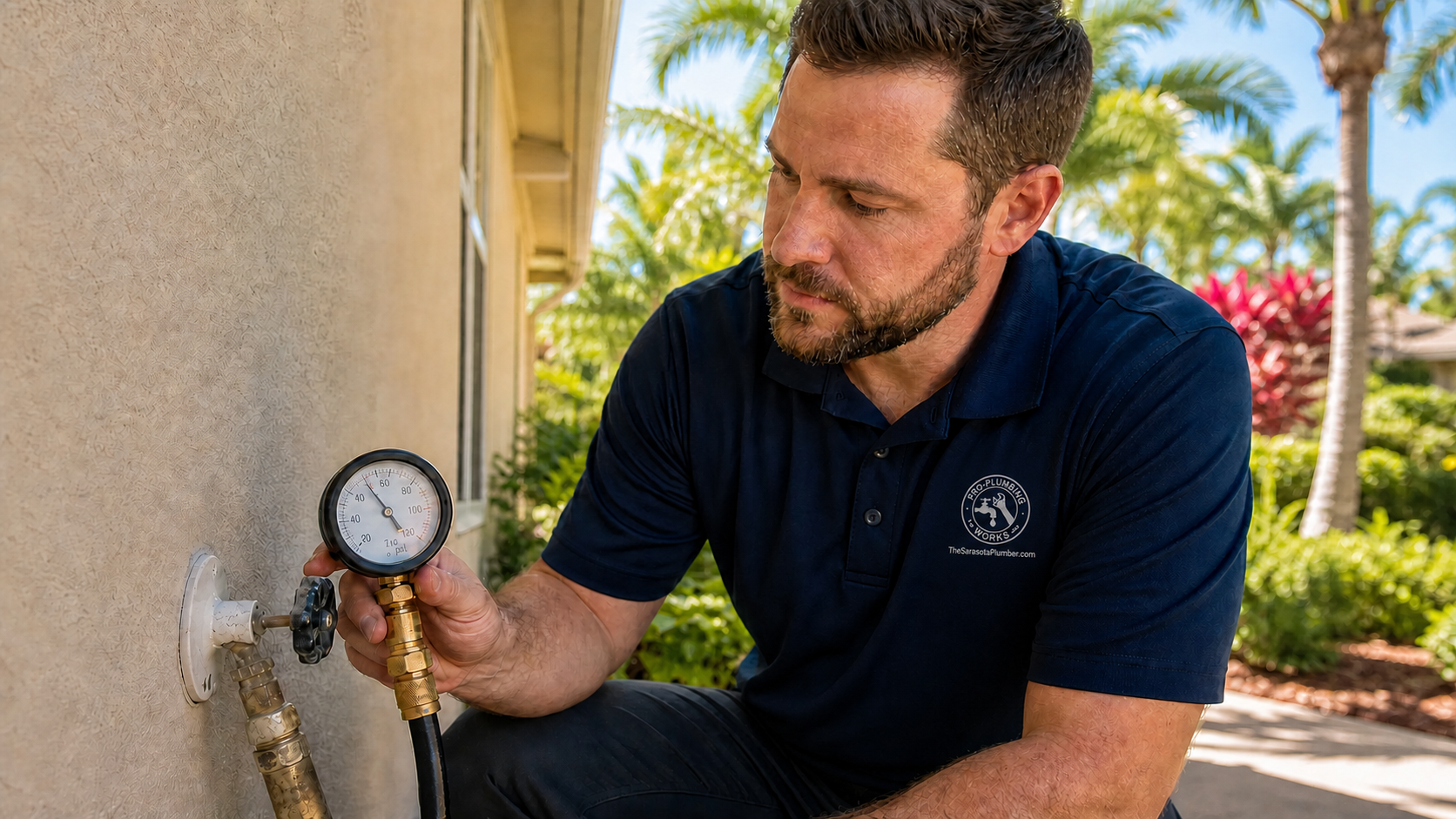
If neighbors lose pressure at the same time, contact the serving water utility. If only one fixture is weak, the problem is usually local to that fixture. If the entire house has low pressure while nearby homes do not, check the main valve, filter or softener, pressure-regulating equipment, leaks and the private service line.
The location and timing of the pressure drop are more useful than guessing at a single cause.
Is the problem pressure or flow?
Homeowners often use the terms interchangeably, but they describe different behavior.
- Static pressure is the pressure when no water is flowing.
- Flow is the amount of water delivered while fixtures are operating.
- Dynamic pressure is the pressure remaining while water is flowing.
A house can show acceptable static pressure but poor flow because of a restriction. It can also lose pressure when several fixtures operate because the service line, valve, filter or regulator cannot deliver enough water.
Step 1: Determine how much of the home is affected
One faucet or shower is weak
Remove and inspect the faucet aerator or showerhead according to the manufacturer's instructions. Mineral debris can restrict one outlet. Also compare hot and cold water; weakness on only one side narrows the problem.
One room is affected
A partially closed stop valve, damaged supply tube or branch-line restriction may be responsible.
Hot water is weak throughout the home
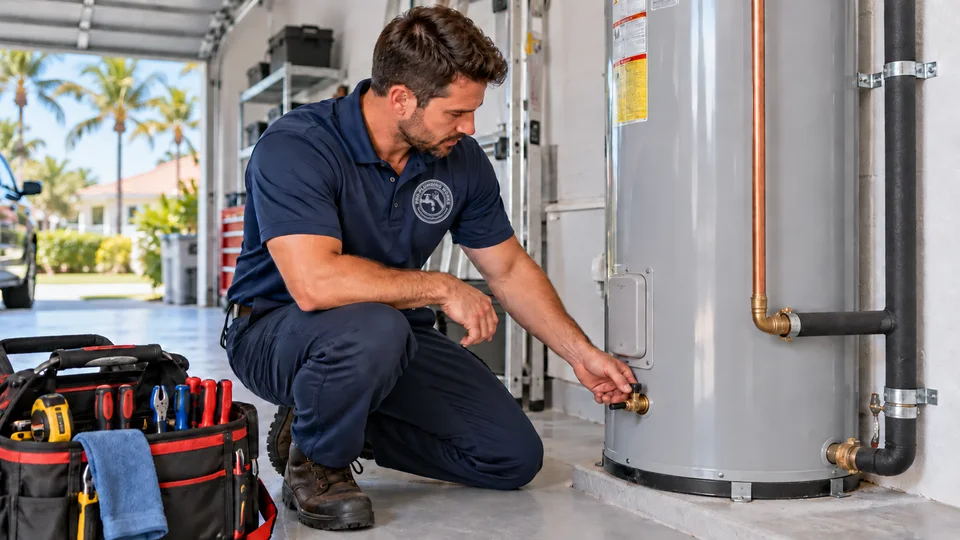
The restriction may be associated with the water heater, hot-water valves or hot distribution piping rather than the utility. If the problem is limited to hot water, review our guide to common Sarasota water-heater questions.
Both hot and cold water are weak everywhere
Focus on components shared by the whole house: utility supply, meter area, main shutoff, service line, pressure regulator and water-treatment equipment.
Step 2: Ask whether neighbors are affected
When multiple nearby properties experience the same sudden change, a utility project, main break, hydrant use or system condition becomes more likely. Check official alerts or call the utility serving the address.
City and County systems are separate. City of Sarasota customers can report a water or sewer emergency at 941-263-6884. Sarasota County Utilities customers can call 941-861-6790 for utility service questions and emergencies. Properties served by another municipality or private utility should contact that provider.
Do not adjust household equipment to compensate for a confirmed utility interruption.
Step 3: Check valves without forcing them
A main shutoff or fixture valve that is not fully open can restrict flow. Visually inspect accessible valves, but do not force a corroded, stuck or unfamiliar valve. An older valve can break when operated.
If pressure changed immediately after plumbing, filtration or utility work, tell the plumber what was touched and when the symptom began.
Can a water filter or softener reduce pressure?
Yes. A clogged filter, fouled or compacted media, an obstructed control valve, an incorrect bypass position or an undersized treatment system can reduce flow. For the differences between filtration and softening, see our Sarasota whole-house water-filtration guide.
As a diagnostic step, a qualified technician may compare performance before and after the equipment or place it in bypass according to manufacturer instructions. Bypass results do not prove the treatment system was improperly selected; the unit may simply require service.
What does a pressure regulator do?
Some homes use a pressure-reducing valve to control high incoming pressure. When it malfunctions or is incorrectly adjusted, the home may experience low, high or fluctuating pressure.
Do not adjust a regulator solely by feel at a faucet. A plumber should measure static and flowing pressure and check that the rest of the system can safely handle the setting.
Can a leak cause low water pressure?
A large supply leak can reduce available flow, but many small leaks do not create an obvious pressure complaint. Check the water meter with all fixtures off. Meter movement suggests water is being used or lost somewhere on the property.
Other clues include:
- an unexplained high water bill;
- wet or unusually green ground;
- sound of water when fixtures are off;
- damp walls or ceilings;
- warm areas on a floor;
- sudden pressure change.
Can old piping restrict water flow?
Yes. Corrosion, mineral accumulation, damaged liners, undersized branches or a deteriorated service line can reduce usable diameter. The pattern matters: gradual loss over years suggests something different from a neighborhood-wide drop that began this morning.
Replacing aerators will not correct a restriction in the main service line, and raising pressure will not restore missing pipe diameter. The diagnosis should precede the solution.
What will a plumber test?
A systematic evaluation may include:
- static pressure;
- flowing pressure with one and several fixtures operating;
- hot-versus-cold performance;
- flow before and after treatment equipment;
- meter movement with fixtures off;
- shutoff and regulator condition;
- service-line and branch-pipe clues;
- utility status.
Record when the problem started and which fixtures are affected before the visit.
When should you call a Sarasota plumber?
If water pressure is low throughout your home but nearby properties are unaffected, professional testing can help identify whether the problem involves a valve, filter, water-treatment system, pressure regulator, hidden leak or private service line. The cause should be measured and isolated before equipment is replaced or repiping is recommended.
Pro-Plumbing Works provides leak detection, water-treatment service and whole-home repiping throughout Sarasota and Manatee Counties. Call 941-894-1127 or request service online.
Frequently asked questions
Why did my water pressure suddenly drop?
Sudden causes include utility work, a partially closed valve, failed regulator, clogged filter, treatment-equipment issue, leak or debris at fixtures. Determine whether one fixture, the whole home or the neighborhood is affected.
Why does pressure drop when two fixtures run?
The system may have a restriction, undersized component or limited supply. A flowing-pressure and flow-rate test helps locate the bottleneck.
Can a plumber increase my water pressure?
Only after determining the incoming pressure and system condition. Raising pressure without diagnosis can stress fixtures and piping or fail to solve a flow restriction.
Does hard water cause low pressure?
Mineral scale can restrict aerators, showerheads, appliances and some piping over time, but hard water is only one possible cause.
Who handles pressure before the meter?
The serving utility generally controls its public system and meter-side infrastructure, while property-side plumbing is typically the owner's responsibility. Confirm the boundary with the utility.
Is 80 psi too high for a Florida home?
Florida's residential plumbing code limits static water pressure to 80 psi. That is a maximum — not a recommended target for every property. Pressure below 80 psi may be entirely adequate, and usable flow also depends on pipe sizing, restrictions and pressure while fixtures are operating. Have a plumber measure the system before adjusting or replacing a regulator.