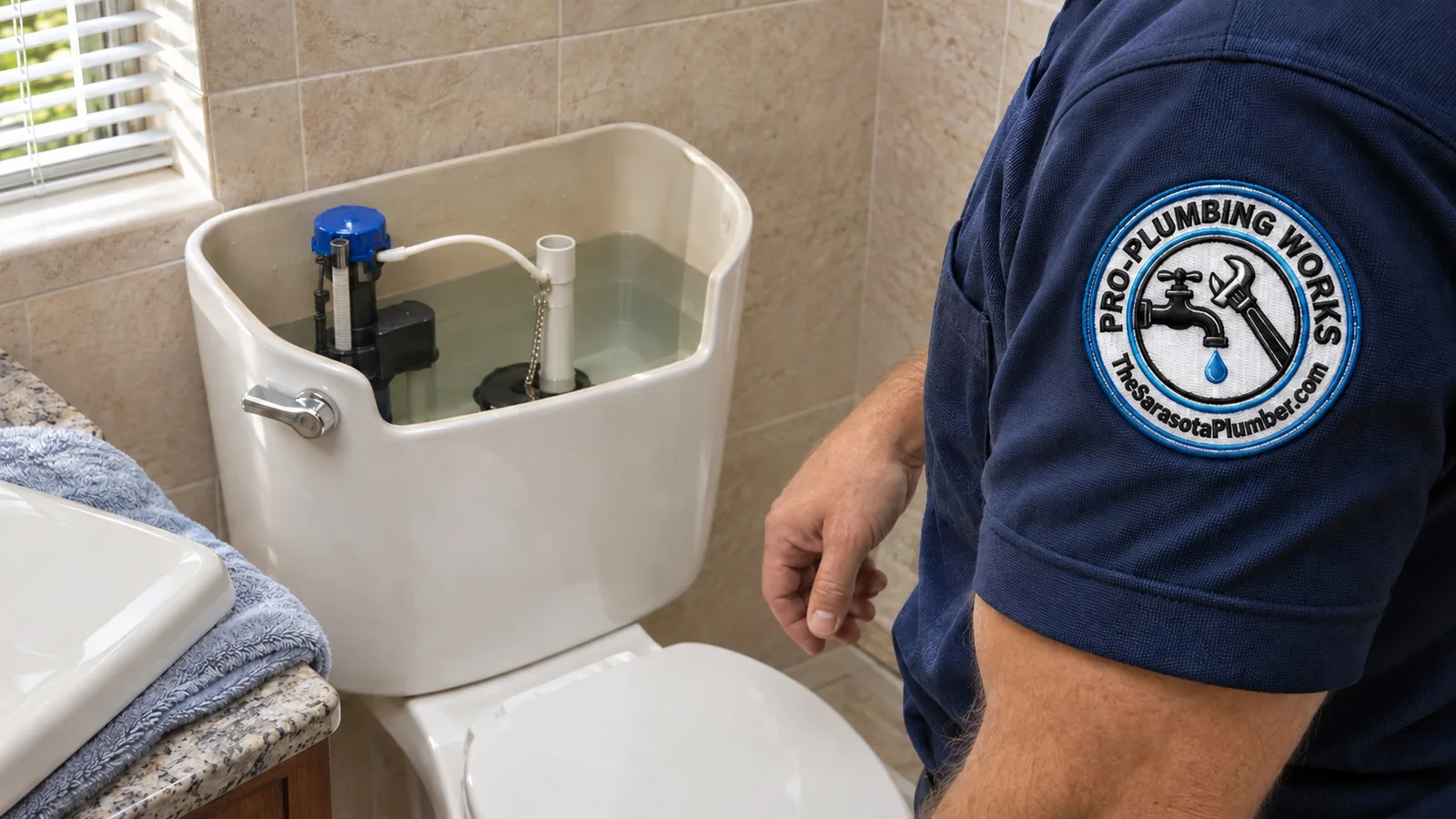
A toilet that keeps running usually has a problem inside the tank, such as a leaking flush seal, a sticking handle, or a fill valve that does not shut off properly. Many of these problems can be repaired without replacing the toilet. Water on the floor, a cracked tank, or a bowl that rises toward overflowing needs a different response.
Before November visitors arrive, listen to the guest bathroom after a flush. Does the tank finish filling and stay quiet, or does it start again when nobody has used it? That observation helps separate a routine tank repair from a drainage or external leak problem.
What does the sound of a running toilet tell you?
A tank normally refills after a flush, then stops. Continued hissing or occasional unexplained refilling gives a plumber useful clues.
| What you notice | What should be checked |
|---|---|
| The tank refills briefly at random times | Water escaping from the tank into the bowl, including the flush seal |
| Water keeps entering the overflow tube | Tank water level, float operation, and the fill valve |
| The handle stays down or needs jiggling | Handle movement, chain position, and whether the flush seal can close |
| Water appears outside the toilet | Supply connection, tank connections, porcelain, and the base |
These observations are clues, not a parts order. Toilets use different mechanisms, including flappers and canister seals. Kohler's running-toilet guidance identifies several possible causes and emphasizes matching parts to the toilet model.
Can you check for a silent toilet leak?
For a conventional tank toilet, the EPA recommends a food-coloring test: add a few drops to the tank water, wait 10 minutes without flushing, and look for color in the bowl. Flush promptly after the test to help prevent staining.
Color in the bowl shows that water moved from the tank when it should have stayed there. It does not prove that every toilet needs the same replacement flapper. A plumber can check the seal, water level, overflow, and refill arrangement together.
Lift the porcelain lid only if you can handle it safely, and set it on a stable surface. Leave concealed-tank, pressure-assisted, and unfamiliar systems to the manufacturer's instructions or a professional.
If your larger concern is unexpected usage, our guide to a high water bill explains how to investigate other possible leak sources. A water bill alone cannot identify which toilet part has failed.
Does a running toilet mean you need a new toilet?
Usually, the first question is whether the existing fixture is sound and has serviceable parts. A worn seal or fill valve can be a reasonable repair when the tank and bowl are intact and the toilet otherwise works well.
Replacement becomes a separate discussion when there is cracked porcelain, unavailable parts, persistent performance problems, or a planned improvement in fit or comfort. Ask for the reason behind the recommendation. A new toilet will not resolve a blockage farther down the drain.
If you decide to replace the fixture, compare dimensions, bowl shape, seat height, access around the toilet, and maintenance requirements before buying. The EPA WaterSense label identifies products independently certified for water efficiency and performance. It does not determine whether a particular model fits your bathroom.
What should you do if there is water on the floor?
Stop using the toilet and look from a dry, safe position. Water at the base can have several sources; do not assume a wax seal is responsible before checking the supply and tank connections.
If you know the fixture's shutoff and it turns freely by hand, close it to limit further incoming water. Do not force a stiff or corroded valve. A rising bowl, sewage backup, or spreading leak needs prompt attention rather than repeated test flushes.
For help finding the correct household valve, use our Sarasota water shutoff guide. In a condominium, coordinate any shared shutdown with building management. Do not operate utility-owned or shared building valves without authorization.
What is worth checking before holiday guests arrive?
Use the guest bathroom before it is needed. Flush once, let the tank finish filling, and return later to listen for unexplained running. Look at the accessible supply connection and floor for moisture. Make a note if the handle sticks or the toilet moves when used.
Keep a small wastebasket available and ask guests to put wipes, paper towels, and personal-care products in the trash. Fix an existing running or leaking fixture ahead of the visit instead of relying on reminders to jiggle the handle.
Pro-Plumbing Works provides toilet repair and installation in Sarasota and Manatee Counties. Call 941-894-1127 or request service with the toilet's symptoms and model information, if available. Ask for the diagnosed cause and proposed scope before approving a repair or replacement.
Frequently asked questions
Why does my toilet run for a few seconds when nobody flushed it?
The tank may be losing water into the bowl and refilling to restore its level. A worn flush seal is one possibility. The water level, overflow, and refill arrangement should also be checked before choosing a part.
Is a running toilet the same as a clogged toilet?
No. Running describes water continuing to fill or escape from the tank. A clog affects waste leaving the bowl. If the bowl rises unusually high, stop flushing and address the drainage problem.
Can a brand-new toilet keep running?
Yes. Installation adjustments, debris, or a component problem can prevent proper shutoff. Newness alone does not identify the cause. Use the correct manufacturer's troubleshooting instructions rather than changing unrelated parts.
Should I replace the whole toilet before family visits?
Have the problem diagnosed first. A sound toilet may need only a tank repair. If replacement is appropriate, confirm fit, flange condition, installation scope, and appointment availability before buying a fixture.