A shower that swings between hot and cold may have a valve problem, unequal supply pressures, or a hot-water supply issue. The most useful first clue is whether only one shower is affected or the problem appears throughout the home. Replacing the water heater without checking that pattern can miss the cause.
When family or friends visit during the holidays, increased water use can make an existing shower temperature problem more noticeable. If the shower suddenly becomes uncomfortably hot, stop using it and have the problem checked before anyone else steps in.
Does the problem affect one shower or the whole home?
Note what happens during ordinary use, without standing in the shower or exposing anyone to a temperature swing. Does a nearby sink provide steady hot water? Does the second bathroom have the same issue? Does the change happen only after several people have showered?
| What happens | What a plumber should investigate |
|---|---|
| One shower changes temperature while nearby taps stay steady | The shower valve, cartridge, settings, and its supplies |
| A toilet flush or another fixture triggers the change | Supply-pressure changes and the valve's ability to compensate |
| Several hot-water fixtures cool after sustained use | Hot-water capacity, recovery, heater operation, and system configuration |
| The shower stays lukewarm even when other taps are hot | Valve settings, mixing components, or a supply restriction |
The pattern narrows the work; it does not prove which component needs replacing. If low flow is also a concern throughout the house, our Sarasota water-pressure guide covers that separate diagnostic path.
What does a shower valve do?
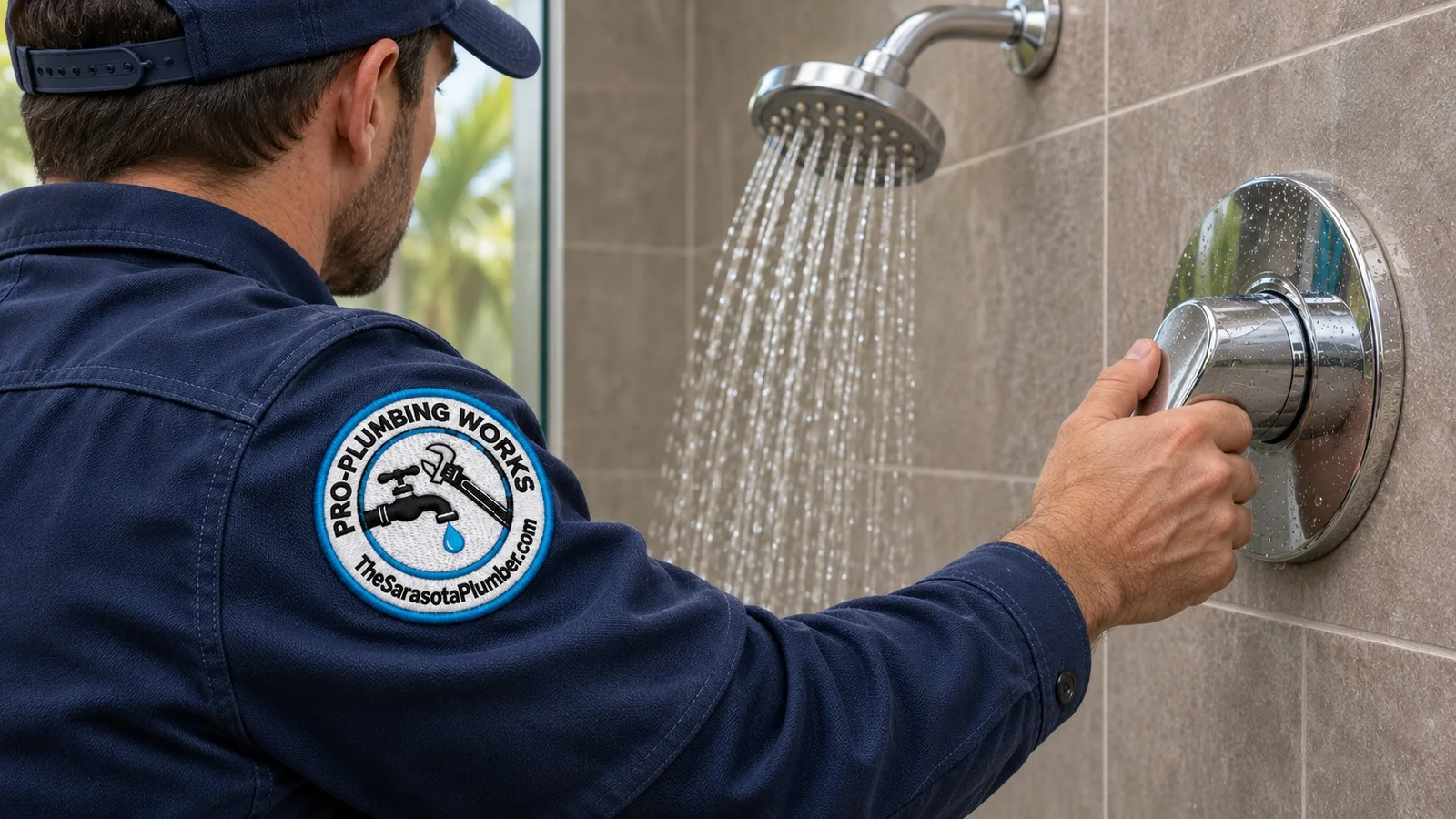
The valve behind the handle controls the water sent to the shower. Depending on the design, a replaceable cartridge contains some of its operating or mixing components.
Pressure-balancing valves compensate for changes in incoming hot and cold water pressures. Thermostatic designs respond to mixed-water temperature. Delta explains the difference between these cartridge types. The type and model matter when deciding which repair or adjustment is appropriate.
These controls do not create more hot water. A functioning shower valve cannot compensate indefinitely for a hot-water source that is no longer supplying the temperature or flow the system needs.
Why can flushing a toilet change shower temperature?
Another fixture drawing water can change supply pressures. A suitable pressure-balancing valve is designed to respond to those changes, but older designs, worn components, restrictions, or installation problems can affect what the shower delivers.
Delta's temperature-balancing guidance describes how its shower controls address pressure changes caused by other water use. That is an explanation of the mechanism, not proof that every existing shower has the same protection or needs the same part.
Telling guests not to flush while someone showers may help identify the trigger. It is not a repair. Give the plumber that observation and ask what the existing valve can safely do.
Can mineral buildup affect a shower cartridge?
It can affect some components. Delta identifies mineral deposits as one possible cause when certain Monitor valves no longer blend hot and cold properly. Wear, debris, and settings can also need investigation.
Do not buy a generic cartridge because the handle looks familiar. Record the brand and any available model information, and photograph the trim. A plumber can establish compatibility and assess whether the valve body is sound before recommending parts.
Pro-Plumbing Works provides bathtub and shower plumbing repair in Sarasota and Manatee Counties, including shower valves and mixing problems. Ask whether the proposed work is a cartridge repair, a setting correction, a supply repair, or replacement of the valve body.
Will a valve repair require opening the wall?
A serviceable cartridge may be accessible through the existing trim opening. A damaged valve body or concealed leak can require a different access plan. The answer depends on the installed hardware and the wall around it.
Before approving work, ask where access will be made, what finishes may be disturbed, and who restores them. Confirm compatible trim before choosing a new handle or finish. A cosmetic trim change alone does not necessarily change the valve's temperature-control function.
For a larger bathroom project, our tub-to-shower planning guide explains the wider drain, waterproofing, and layout questions. Those decisions are different from diagnosing an existing shower's temperature swings.
Should you turn up the water heater to fix the shower?
Do not raise the heater setting as a first fix for one problematic shower. It can increase burn risk without correcting a mixing fault. The U.S. Consumer Product Safety Commission's tap-water scald guidance discusses temperature settings and scald prevention. Equipment and household needs should be assessed together.
If hot water is unstable throughout the home, request a water heater evaluation. Describe when the problem starts, how long hot water lasts, and which other fixtures are in use. In a condo with central hot water, involve building management before anyone changes shared controls.
What should be verified after the repair?
Ask the plumber to confirm stable operation under the conditions that caused the complaint, check for leaks, and set applicable temperature limits according to the manufacturer's instructions. Keep the model and repair details for future service.
Before hosting overnight guests, resolve a known temperature-control problem and confirm how the shower operates. Call Pro-Plumbing Works at 941-894-1127 or request service with the symptom pattern and fixture information.
Frequently asked questions
Is a hot-and-cold shower always a bad cartridge?
No. A cartridge is one possibility. The hot-water source, pressure changes, restrictions, settings, and other mixing components may also matter. The repair should follow diagnosis.
Can I replace the showerhead to fix temperature swings?
A showerhead changes water delivery, but it is not a general fix for a mixing or supply problem. Have temperature instability checked before buying replacement fixtures.
Why does the shower run cold only after guests arrive?
Additional hot-water use may expose a capacity or recovery limitation, while simultaneous fixture use may reveal a valve or pressure issue. Record which pattern occurs rather than assuming the heater is undersized.
Can I test a shower that suddenly becomes scalding hot?
Stop using it and arrange service. Do not have someone stand under the water while another person operates fixtures to reproduce the problem. Give the plumber the circumstances you already observed.