Before putting a seasonal home back into normal use, inspect for leaks, confirm the water supply and equipment settings, and bring unused fixtures back into service in a controlled order. Before using the showers, washing machine, or dishwasher, take a few minutes to inspect your plumbing for leaks or other potential problems.
For a November return to Sarasota, give that first walkthrough its own place on the arrival list. Knowing what was turned off, serviced, or left operating is more useful than guessing whether every valve should be open.
What should you confirm before turning anything on?
Review the departure notes from your home-watch provider, property manager, or household. Establish whether domestic water was shut off, the water heater was powered down or drained, appliance supplies were closed, and filters were serviced.
If you do not have a record, write down what you can identify and leave unfamiliar controls alone. In a Sarasota condominium, ask management about shared water service, recent work, and any building restart instructions. A unit owner should not change a shared valve or central hot-water setting.
Check the water provider's current notices before drinking the water or restarting appliances. A general return-home checklist does not replace a utility advisory or instructions for a home affected by flooding.
What should you look for while the house is still quiet?
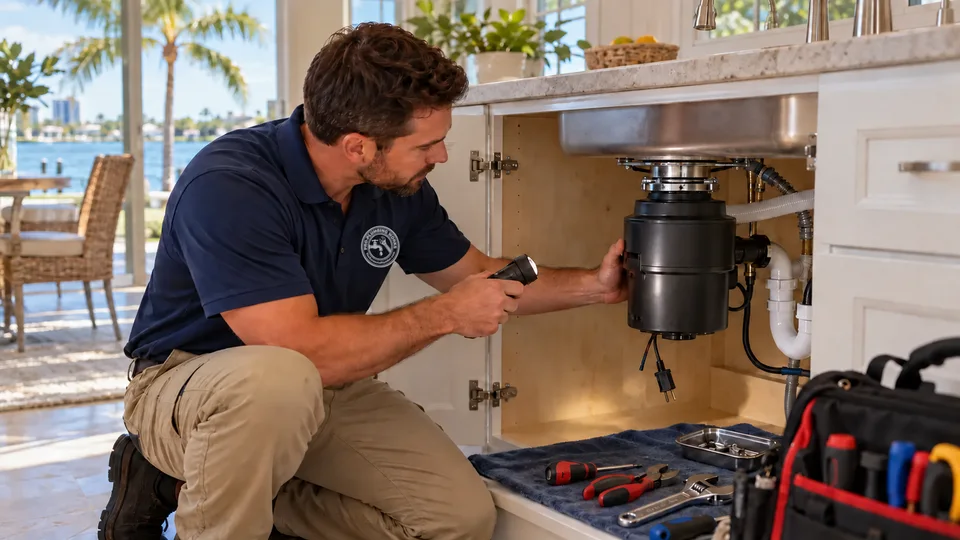
Walk through with a flashlight and check accessible areas:
- Cabinet floors and exposed connections beneath sinks.
- Toilet supply connections, tank exteriors, and floors around the bases.
- The water heater's visible connections, drain pan, and surrounding floor.
- Accessible appliance hoses and the floors around them.
- New stains, damp areas, or a sound of running water when no fixture is in use.
Do not move heavy appliances or remove electrical covers to complete the checklist. Photograph anything unusual and note its location. If water is spreading, stop the restart and arrange help with the leak before using additional fixtures.
Our water shutoff guide can help you identify household controls. Avoid forcing a valve that is stiff, corroded, or leaking. Have a plumber establish the correct restart procedure when the system's condition is uncertain.
How should you approach taps that have not been used for months?
Sarasota County's guidance for reopening seasonal residences notes that water sitting in plumbing during extended nonuse can create water-quality concerns. Its section "Tips for Retaining or Restoring Water Quality in Buildings" links to EPA recommendations for low-use properties and reopening after an extended vacancy. Review that local guidance alongside any utility or building instructions.
Water sitting in household plumbing needs attention before routine use. The CDC's household guidance recommends flushing faucets and showerheads that have been unused for a week or more. Its basic procedure is to run cold water fully for two minutes, then run hot water until it starts to feel hot, with the equivalent sequence for a single-handle fixture.
Confirm that service is restored, the heater is ready for operation, and there is no conflicting utility or building instruction before following that guidance. Keep people clear of potentially hot discharge and avoid standing in shower spray during the flush. A leak, backup, unusual discoloration, or other abnormal condition is a reason to stop and get advice.
The same CDC guidance calls for maintaining water-using devices and filters according to their manufacturers' instructions. A quick rinse is not a substitute for an overdue cartridge change or a device-specific restart procedure. Flushing also does not certify that water is safe or override an advisory.
Should you switch the water heater on immediately?
First confirm what happened before you left. A tank heater that was drained needs the manufacturer's filling and startup procedure before operation. Rheem's tank-heater instructions warn against operating the covered heater unless it is completely full of water. Use the instructions for your own model.
If you are uncertain whether a tank is full, whether power or fuel was isolated, or why a pan contains water, arrange a check rather than experimenting with controls. Pro-Plumbing Works' water heater maintenance service can address equipment condition and the appropriate service plan.
This return-home check is about putting the system back into use. Our separate water heater maintenance article explains the more detailed inspection and maintenance questions.
How can you check bathrooms and appliances without creating a bigger problem?
Bring fixtures into use individually so you can tell which one causes a symptom. Watch the first toilet flush and let its tank finish filling. Run a sink while checking the visible connections below it. Confirm water drains normally before leaving a fixture running unattended.
An unused drain's water seal can dry out. If an odor remains after a trap has been replenished, or returns quickly, use our Sarasota bathroom sewer-odor guide for the next diagnostic questions. Do not hide the symptom with repeated chemical treatments.
Restart the dishwasher, washing machine, refrigerator water system, and treatment equipment according to their manuals. Stay nearby during the first operating cycle to watch for leaks. A hose that was disconnected, a closed supply valve, or an overdue service item needs resolving before the appliance is left to run.
What information helps if you need a Sarasota plumber?
Prepare a short handoff: when the home was last occupied, what was shut down, any work completed while you were away, and which fixture produced the problem. Add photographs and building access requirements. For a condo, include management's contact procedure and any shutdown restrictions.
Pro-Plumbing Works handles plumbing repairs in Sarasota and Manatee Counties. Call 941-894-1127 or request a visit with your observations. Describe the work you need checked rather than assuming a particular inspection package or completion time.
Frequently asked questions
Is clear water proof that my seasonal home's plumbing is ready?
No. Appearance does not confirm water quality, leak-free connections, correct equipment settings, or appliance readiness. Check the provider's notices, follow restart instructions, and investigate symptoms separately.
Should I open every faucet at once when I return?
Use a planned sequence based on utility, building, and equipment guidance. Checking fixtures individually makes a leak or drainage problem easier to locate. Large or shared systems may need a building-specific procedure.
What if someone used the house while I was away?
Ask which rooms and fixtures were used and when. A frequently used kitchen does not tell you whether a guest shower, bathroom sink, or refrigerator line was maintained during the absence.
Can my property manager do the first walkthrough?
An authorized manager can document visible conditions and coordinate access within their role. Plumbing repairs, uncertain equipment startups, and shared-system changes should go to the appropriate professional or building representative.