
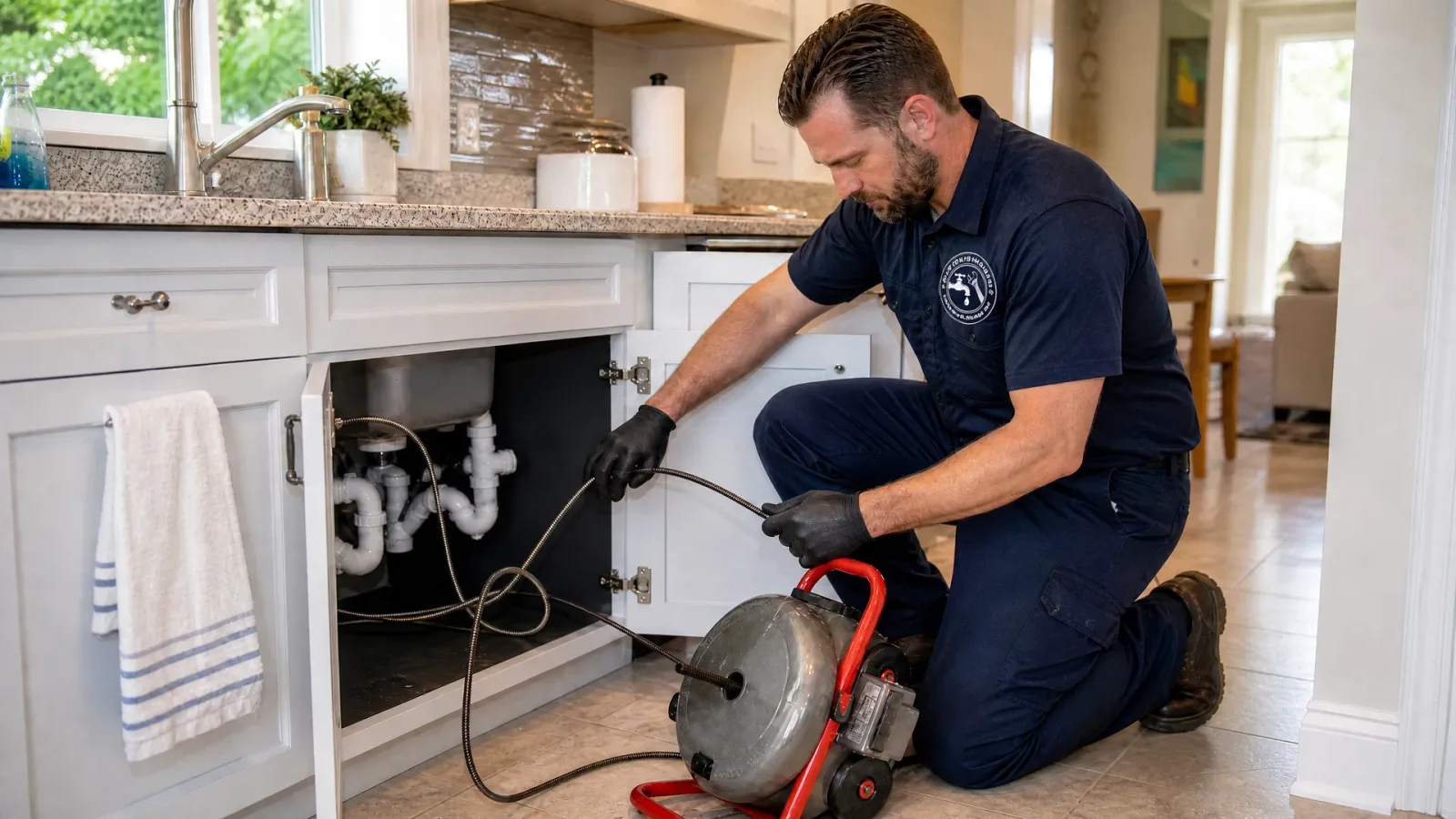
Why Does the Same Drain Keep Clogging?
A drain that clogs once and stays clear after snaking usually had a simple blockage. A drain that clogs again within days or weeks has an underlying cause that the snake did not resolve. In most cases, the problem is either a persistent buildup of grease, hair, or debris inside the pipe, a structural issue such as a crack, offset joint, or root intrusion, or a blockage that is further down the line than the snake reached.
Recurring clogs are a frequent service concern for homeowners. The appropriate fix depends on where the blockage is and what is causing it. For a broader overview of methods and warning signs, see our Sarasota drain-cleaning guide.
Is the Clog in the Fixture or the Main Sewer Line?
The location of the clog determines the right solution. A single slow drain in one fixture usually points to a localized blockage in the branch line serving that fixture. When multiple drains in the home are slow at the same time, or when water backs up in one fixture when another is used, the blockage is more likely in the main sewer line.
Gurgling sounds from other fixtures when a toilet is flushed can indicate air displacement from a partial main-line blockage. A sewage odor near drains may indicate a slow-moving or partially blocked sewer line.
If you are unsure which applies, a sewer camera inspection can help locate the affected section and visually assess likely causes. Our sewer camera inspection guide explains what this diagnostic can and cannot show.
What Materials Cause Recurring Drain Clogs?
Kitchen Grease and Food Waste
Cooking grease is a common contributor to recurring kitchen sink clogs. Grease poured down the drain while hot flows easily, but it cools and solidifies on the pipe walls as it moves through the line. Over time, the buildup narrows the pipe opening and catches food particles, coffee grounds, and other debris. A drain snake may open a pathway through a blockage without removing all buildup from the pipe walls, allowing the restriction to develop again.
Food scraps, coffee grounds, and starchy foods such as pasta and rice can also contribute to kitchen drain buildup. Whether eggshells or small bones are permitted varies by disposal model, so follow the appliance manufacturer's instructions.
Hair and Soap Scum
Bathroom sink and shower drain clogs are commonly associated with a combination of hair and soap scum. Hair binds together inside the drain and catches soap residue, forming a dense mat that restricts flow. A drain snake can pull out the immediate blockage, but strands of hair that remain in the pipe catch new material quickly.
A mesh drain cover in the shower is one of the most effective ways to reduce how often the drain needs to be cleared.
Flushed Wipes and Non-Flushable Items
Wipes labeled "flushable" may not disperse like toilet paper and can contribute to sewer blockages, especially when combined with fats, oils, grease, or other debris. Paper towels, cotton products, dental floss, and hygiene products can create similar problems. The U.S. EPA's guidance on sanitary sewer overflows advises keeping wipes and fats, oils, and grease out of sewer systems.
The only materials that should be flushed are human waste and toilet paper.
Tree Roots
In homes with older clay or cast-iron sewer laterals, pipe joints, cracks, or corrosion can create entry points for roots. Tree roots seek out moisture and can enter these pipes through small cracks or loose joints. Once inside, roots grow and branch, eventually restricting or blocking flow entirely. A drain snake may temporarily clear the line, but the roots regrow and the clog returns. Root intrusion requires either mechanical root cutting, hydro jetting, or a pipe repair or replacement depending on the extent of the damage.
Aging or Damaged Pipes
Older cast-iron and clay drain lines can corrode, crack, or develop offset joints over time, but pipe material and condition vary by property. Debris catches at these irregularities, and the drain clogs repeatedly at the same location. In these cases, clearing the blockage does not address the structural cause. A sewer camera inspection can identify whether the pipe itself is contributing to the problem.
Are Chemical Drain Cleaners Safe to Use?
Chemical drain cleaners sold at hardware stores can dissolve some types of organic blockages, but they carry risks that are worth understanding before use.
Most chemical drain cleaners work by generating heat through a chemical reaction. This heat can soften PVC fittings, damage older metal pipes, and degrade rubber gaskets and seals over time. If the drain is fully blocked and the chemical cannot flow through, it can sit in the pipe and cause damage at the point of contact.
Chemical cleaners also do not address structural causes such as root intrusion, pipe offset, or grease coating on pipe walls. They may temporarily restore flow without resolving the underlying problem, which is why the clog returns.
For recurring clogs, older or unknown pipe materials, or a completely blocked drain, avoid repeatedly adding chemical cleaner. A licensed plumber can assess whether mechanical drain cleaning, hydro jetting, or pipe repair is appropriate for the pipe's condition.
A recurring clog can indicate residue left in the line, root intrusion, a damaged pipe, or a blockage beyond the reach of the first cleaning. Identifying the cause before choosing a remedy reduces guesswork.
What Should Never Go Down a Kitchen Sink?
The following materials are among the most common contributors to recurring kitchen drain clogs:
- Cooking grease, oils, and fats: solidify on pipe walls as they cool
- Coffee grounds: accumulate and bind with grease
- Eggshells: recommendations vary by disposal model; follow the manufacturer's manual
- Pasta, rice, and bread: absorb water and expand inside the pipe
- Fibrous vegetables such as celery, artichoke leaves, and corn husks can wrap around disposal blades and accumulate in the drain
- Starchy peels: potato and banana peels can form a paste that coats the pipe
- Bones and hard food scraps: only process materials explicitly permitted by the disposal manufacturer
Turn on cold water before starting the disposal and let it run for several seconds after grinding stops, following the manufacturer's instructions. See InSinkErator's operating guidance. Grease should be collected in a container and disposed of in the trash.
Pro Tip: Keep a small container near the stove to collect cooking grease. Once it solidifies, dispose of it in the trash. This habit can help reduce grease-related kitchen drain clogs.
When Is Hydro Jetting Necessary?
Hydro jetting uses high-pressure water to scour the interior walls of a drain or sewer line, removing grease buildup, mineral scale, debris, and in some cases soft root growth. Depending on the obstruction and pipe condition, it may remove more wall buildup than a drain snake, which is designed primarily to open or retrieve a blockage.
Hydro jetting is typically recommended when:
- A drain has been snaked multiple times and the clog returns within a short period
- Grease buildup is suspected in a kitchen drain line
- Multiple drains in the home are slow at the same time
- A sewer camera shows significant buildup or soft root growth inside the pipe
- The home has not had a drain cleaning in several years and is experiencing slow flow throughout
Hydro jetting is not appropriate for all pipe conditions. Severely corroded, cracked, or offset pipes may not be able to withstand high-pressure cleaning. A sewer camera inspection before hydro jetting confirms whether the pipe is in suitable condition.
Will a Sewer Camera Identify the Cause?
A sewer camera inspection involves inserting a flexible waterproof camera into the drain line to view accessible portions of the pipe in real time. It can help locate and visually assess:
- The location and nature of a blockage (grease, debris, roots, foreign objects)
- Cracks, corrosion, or deterioration in the pipe wall
- Offset or separated joints where debris accumulates
- Root intrusion
- Bellied sections of pipe where water and debris pool
Camera inspections are particularly useful for recurring clogs because they may show whether visible buildup, roots, damage, or alignment problems are contributing. For homes with older cast-iron or clay sewer lines, a camera inspection can reveal whether the pipe is approaching the end of its serviceable life.
After a camera inspection, the plumber can recommend the most appropriate next step: drain snaking, hydro jetting, spot repair, sewer line repair, or in some cases a full line replacement.
Drain Cleaning and Sewer Services in Sarasota
Pro-Plumbing Works provides drain cleaning, hydro jetting, and sewer camera inspections for homeowners throughout Sarasota, Bradenton, Venice, North Port, Lakewood Ranch, and surrounding communities in Sarasota and Manatee counties. When a drain keeps clogging, our licensed plumbing team evaluates the symptoms and available inspection findings before recommending a solution. Seasonal backups may also be influenced by conditions described in our rainy-season drain guide.
FL License CFC1428540. Call 941-894-1127 to schedule a drain inspection or to learn what is included in the diagnostic visit and estimate.
Key Takeaways
- A drain that clogs repeatedly in the same spot usually has an underlying cause that a drain snake alone does not resolve.
- Kitchen grease, hair, wipes, root intrusion, and aging or damaged pipes can contribute to recurring drain clogs.
- When multiple drains are slow at the same time, or when water backs up in one fixture when another is used, the blockage may be in the main sewer line rather than a single fixture.
- Chemical drain cleaners can temporarily restore flow but do not address structural causes and may damage older pipes with repeated use.
- A sewer camera inspection can help locate and visually assess buildup, roots, damage, or alignment problems that may influence the repair approach.
- Call Pro-Plumbing Works at 941-894-1127 for a free estimate on drain cleaning, hydro jetting, or sewer camera inspection in Sarasota.
Frequently Asked Questions About Recurring Drain Clogs in Sarasota
Why does my kitchen sink clog even though I use a garbage disposal?
Garbage disposals grind food waste into small particles, but they do not prevent grease, oils, and starchy foods from coating the drain line. Grease solidifies on pipe walls as it cools, gradually narrowing the pipe opening. Running cold water before and after using the disposal helps, but grease poured down the drain accumulates over time regardless of disposal use.
Is it normal for a shower drain to clog every few months?
A shower drain that clogs every few months usually has a hair and soap scum buildup problem. A mesh drain cover reduces how much hair enters the pipe. If the drain continues to clog frequently after installing a cover, the buildup may be further down the branch line and may benefit from a more thorough cleaning.
Can tree roots really get into my drain pipes?
Yes. Tree roots seek out moisture and can enter clay and cast-iron pipes through small cracks or loose joints. Once inside, they grow and branch, eventually restricting or blocking flow. Root intrusion is common in older Sarasota neighborhoods where mature trees grow near aging sewer lines. A sewer camera inspection can help confirm whether roots are visible in accessible portions of the line and where the affected section is located.
How do I know if my main sewer line is clogged?
Signs that the main sewer line may be partially or fully blocked include multiple slow drains throughout the home, gurgling sounds from toilets or drains when other fixtures are used, water backing up in a bathtub or drain when the toilet is flushed, and sewage odors near drains. These patterns suggest the blockage is in the shared main line rather than a single fixture's branch line.
Are flushable wipes actually safe to flush?
Wipes labeled "flushable" may not disperse like toilet paper and can combine with grease or debris to contribute to blockages. The U.S. EPA advises keeping wipes out of sewer systems. Only human waste and toilet paper should be flushed.
How long does hydro jetting take?
The time required depends on the length of the line, the severity of the buildup, and whether a camera inspection is performed. A straightforward residential drain cleaning typically takes one to two hours. Lines with significant grease buildup or root growth may take longer. A plumber can give a more accurate estimate after reviewing the line.
What is the difference between drain snaking and hydro jetting?
A drain snake is a flexible cable that punches through or pulls out a blockage. It can be effective for opening or retrieving an obstruction, but it may not remove all residue from the pipe walls. Hydro jetting uses high-pressure water to scour the interior of the pipe, removing buildup from the walls and flushing debris out of the line. Hydro jetting may provide more complete wall cleaning and can be considered when a drain has clogged repeatedly or when inspection findings indicate significant buildup, provided the pipe is suitable for high-pressure cleaning.
Can a high water bill be caused by a drain problem?
A slow or clogged drain does not directly cause a high water bill. However, a suddenly high water bill is often caused by a hidden water-supply leak, which is a separate issue from a drain clog. If you are experiencing both a recurring drain problem and an unexplained increase in your water bill, the two issues likely have different causes and should be evaluated separately.
Pro-Plumbing Works, LLC is a licensed and insured plumbing contractor serving Sarasota, Venice, Bradenton, North Port, and surrounding communities in Sarasota and Manatee counties. FL License CFC1428540. Call 941-894-1127 or visit thesarasotaplumber.com.