A steady drip from the spout often points to a worn cartridge, washer, seal or valve component. Water around the handle or faucet base may involve O-rings, seals or a loose connection. Moisture inside the cabinet can come from supply lines, shutoff valves, the drain or the faucet body. Repair is often practical when the fixture is sound and parts are available; replacement makes more sense when the body is corroded, cracked, obsolete or repeatedly failing.
The first job is finding where the water begins, not where it finally drips.
What does the leak location tell you?
Dripping from the spout
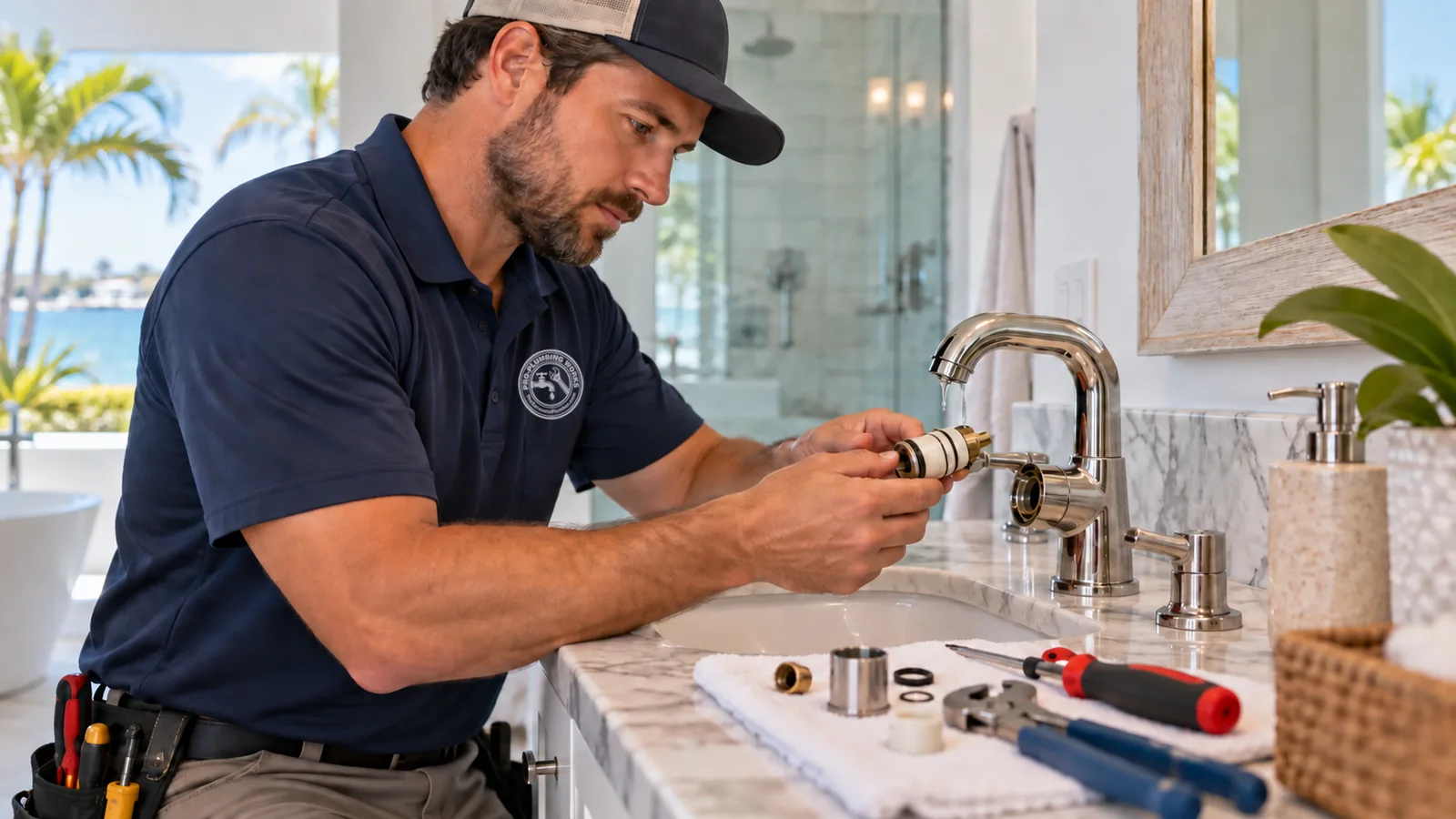
When a closed faucet continues to drip, an internal sealing component is not closing fully. The correct part depends on whether the faucet uses a cartridge, ceramic disc, compression stem or ball assembly.
Water around the handle
This can indicate a worn O-ring, packing or cartridge seal. The leak may appear only while the faucet is running.
Water at the faucet base
Moisture can come from a failed base gasket, loose mounting, splash water or a leak above the counter. Dry everything and observe the faucet while it operates.
Water inside the cabinet
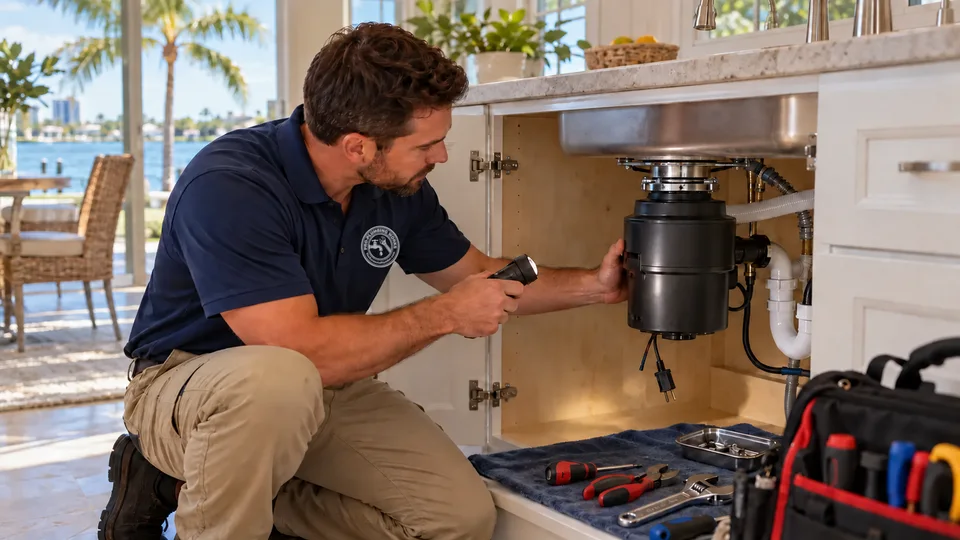
Check supply tubes, stop valves, faucet connections, sprayer hose, drain assembly and disposal or dishwasher connections. A cabinet leak deserves prompt attention because hidden moisture can damage cabinetry and finishes.
Can mineral buildup cause low flow?
Yes. Debris can collect in the aerator, spray head or internal cartridge. Remove and inspect an aerator only if you can do so without damaging the finish, and note the order of its parts.
If both hot and cold flow are weak at one faucet, the aerator is a reasonable first check. If only one side is weak, the supply valve, connector or cartridge may be involved. If water flow is weak throughout the home, our Sarasota low-water-pressure guide explains other possible causes.
How much water can a dripping faucet waste?
The U.S. EPA reports that household leaks waste thousands of gallons annually on average, and common sources include dripping faucets and leaking valves. The exact loss from one faucet depends on the drip rate.
Do not use a generic savings promise to justify replacement. Measure the leak, confirm the cause and compare the repair with a suitable fixture.
When is faucet repair the better choice?
Repair is often reasonable when:
- the faucet body and finish remain sound;
- the model can be identified;
- genuine or compatible parts are available;
- the valve seat or mounting area is not badly damaged;
- supply connections are in serviceable condition;
- the repair addresses the actual leak.
A quality faucet can be worth repairing. A low-cost fixture with unavailable parts may not be.
When should the faucet be replaced?
Replacement may be practical when the fixture is cracked, extensively corroded, unstable, incompatible with the sink, repeatedly failing or impossible to service. It can also make sense during a planned sink or countertop change.
Before buying, confirm hole count, hole spacing, countertop thickness, spout reach, clearance, supply connection and whether accessories such as a side sprayer are needed.
What should Sarasota homeowners know about shutoff valves?
An older stop valve may leak or fail when operated. Do not force a stuck valve. If the faucet cannot be isolated reliably, the valve may need service before the fixture work begins.
Know where the home's main water shutoff is located. Our guide explains where Sarasota homes commonly have their main shutoff.
How do you choose an efficient replacement?
Look for a fixture appropriate for the room, household and plumbing. WaterSense-labeled bathroom faucets and accessories are independently certified for efficiency and performance. Kitchen faucet needs differ, especially when filling pots or using a pull-down spray head.
Efficiency, serviceable parts and installation quality matter more than a long list of features.
What will a plumber inspect?
A professional evaluation may include the faucet mechanism, mounting, supply tubes, valves, sink deck, drain, water pressure and signs of leakage below. If staining or cabinet damage is present, the plumber can help isolate whether the faucet or another connection is responsible.
How should you document an intermittent leak?
Some faucets leak only when the handle moves, the sprayer is extended or water collects around the base. Dry the area completely and use a flashlight while operating each function separately. A short video can help if the leak stops before the appointment.
Note whether the moisture appears with hot water, cold water, spray mode or draining. Avoid covering the connections with towels while checking for leaks. Water can travel along the pipes, making it harder to find where the leak started.
What changes when the sink or countertop is being replaced?
When replacing a sink or countertop, it's a good opportunity to check faucet reach, mounting clearance, hole configuration, drain location and shutoff access. For kitchen projects, also consider the disposal and dishwasher drain connections. A fixture that looks right in a showroom may not fit the existing sink deck or allow room for tightening hardware below.
For coastal and seasonal Sarasota properties, choose finishes and internal parts that can be serviced after periods of vacancy. Keep the model number and parts diagram with the property records.
What should a faucet estimate include?
Clarify whether the homeowner or plumber supplies the fixture, which connectors and valves are included, whether the drain assembly is being changed, and what happens if a corroded stop valve cannot be operated. Ask whether drywall, cabinet, countertop or tile repair is outside the plumbing scope.
After installation, test hot and cold operation, spray functions, drain closure and every accessible connection. Look again after the cabinet has remained dry for several minutes.
How should you protect the cabinet after a repair?
Leave the area beneath the sink visible for the first several uses instead of immediately replacing stored products. Wipe every connection dry, run hot and cold water, operate the sprayer, fill and drain the basin, and check again with a dry paper towel. A battery leak alarm can provide an additional warning, but it does not replace sound connections or periodic inspection. If cabinet material is swollen or stained, correct the water source before cosmetic repairs.
Pro-Plumbing Works provides faucet repair and installation throughout Sarasota and Manatee Counties. Call 941-894-1127 or request service online.
Frequently asked questions
Why does my faucet drip after I turn it off?
An internal sealing part may be worn, damaged or obstructed by debris. The exact component depends on the faucet design.
Can high pressure damage a faucet?
Excessive pressure can stress fixtures, connectors and valves, but a pressure measurement is needed before drawing that conclusion.
Why is only the hot side weak?
The hot-side stop valve, supply tube or internal faucet component may be restricted. The water heater or hot-water distribution can also be involved if other fixtures show the same symptom.
Should I replace supply lines with the faucet?
Their age, material, condition and compatibility should be inspected. Replacement is not automatic, but damaged or incompatible connectors should not be reused.
Is a WaterSense faucet lower pressure?
No. WaterSense-labeled bathroom faucets use less water while meeting performance standards. They limit flow, not the home's water pressure. If the flow seems unusually weak, debris or a plumbing issue may be responsible.