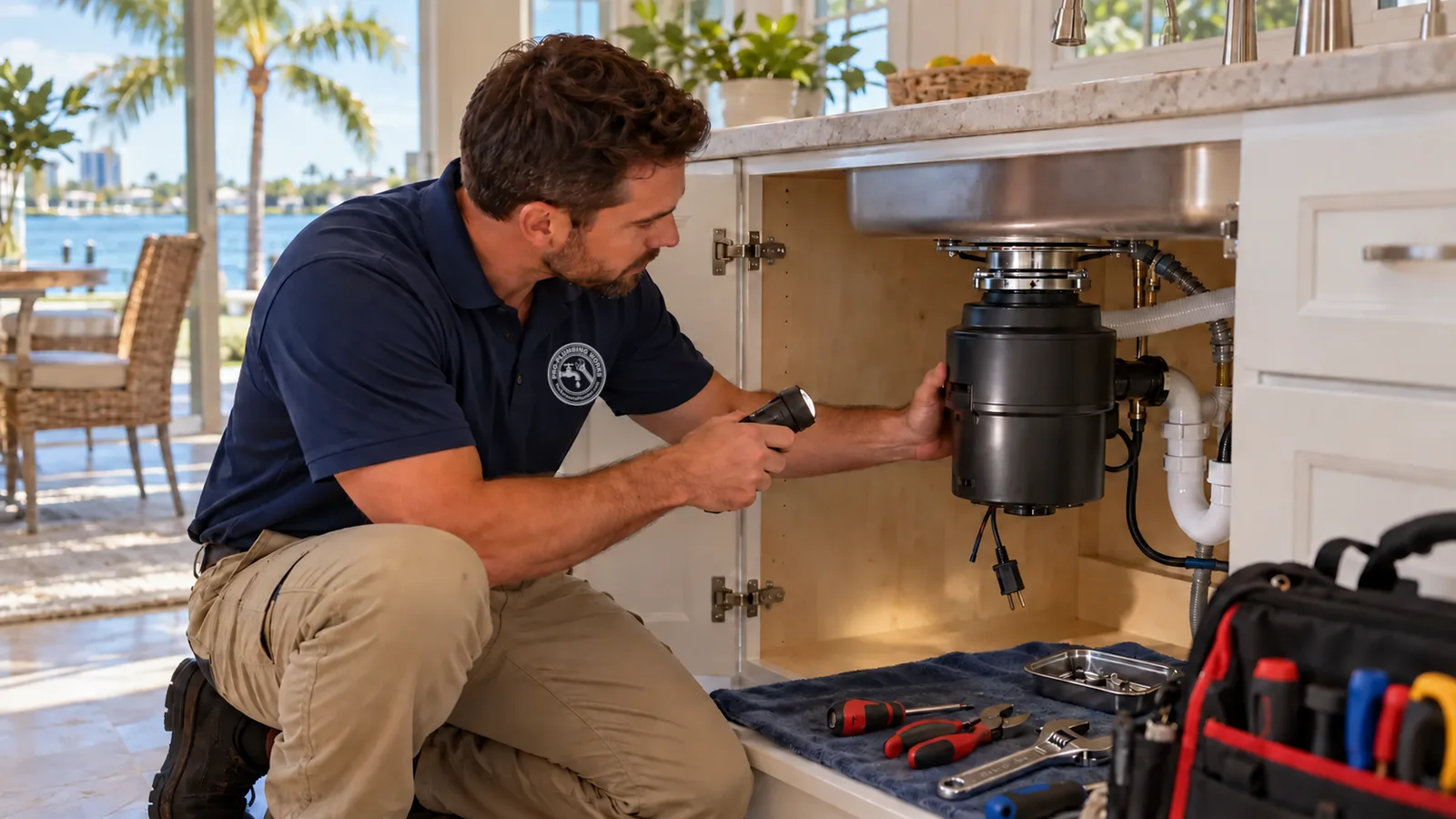
If a garbage disposal is completely silent, check the switch, breaker and reset button. If it hums but does not turn, switch off power immediately because the grinding mechanism may be jammed. If water backs up into the sink, the problem may be in the disposal, trap or drain line. Leaks can come from the sink flange, dishwasher connection, discharge pipe or the unit itself.
Those symptoms point to different repairs. Repeatedly flipping the switch is not a diagnosis and can damage the motor.
Start with the symptom
The disposal is silent
A silent unit may have lost power, tripped its internal overload protector or reached the end of its service life. Turn the wall switch off. Check the circuit breaker and follow the manufacturer's reset procedure only when the unit is cool and the sink is clear. If the breaker trips again, leave the disposal off and have it inspected.
Never put a hand into the disposal. A switch can be mislabeled, defective or unexpectedly energized.
The disposal hums
Humming usually means the motor is receiving power but cannot rotate. Switch it off immediately. Some models can be freed with the correct manufacturer's tool from beneath the unit, but the power must be disconnected first. If the jam returns or the motor smells hot, stop using it.
The sink drains slowly
The restriction may be inside the disposal, the trap, the horizontal drain arm or farther down the branch line. A second sink bowl that backs up at the same time is an important clue. Review our guide to recurring drain clogs in Sarasota for signs that the problem extends beyond the appliance.
Water leaks below the sink
Dry the cabinet and look for where the water first appears. Water at the sink flange is different from a leak at the dishwasher hose, discharge connection, trap or disposal housing. Do not assume the black cylinder is the source simply because water drips from its bottom.
What should never go into a disposal?
The disposal is designed for small amounts of food residue, not for clearing everything from a plate. Avoid grease, oil, fibrous husks, shells, bones, coffee grounds and large quantities of starchy food. Keep utensils, glass and nonfood material out.
Run cold water before, during and briefly after grinding, following the manufacturer's instructions. Never pour grease or cooking oil down the drain, even when running cold water.
Is the disposal causing the dishwasher problem?
Many dishwashers discharge through a hose connected to the disposal or sink drain. Standing water may result from a blocked hose, drain-path restriction, incorrect hose routing or a knockout plug left in a newly installed disposal.
Do not remove parts until the appliance and disposal are safely disconnected. A plumber can inspect the shared drain path and connection without guessing which appliance is responsible.
When is repair reasonable?
Repair may make sense when the unit is otherwise sound and the problem is a removable jam, loose fitting, damaged discharge gasket or correctable drain connection. The model, parts availability, installation condition and labor required all matter.
Replacement is more likely when the housing leaks, the motor repeatedly trips, internal parts are badly corroded, the unit is unusually noisy after debris is removed or repair cost approaches the price of a properly sized replacement.
What should a Sarasota homeowner check before replacement?
Ask the plumber to review:
- the existing unit's horsepower and electrical connection;
- sink-flange condition and compatibility;
- available cabinet space;
- dishwasher connection;
- trap and drain alignment;
- evidence of a downstream blockage;
- whether the switch or wiring requires a licensed electrician.
A larger motor is not automatically better. The installation must fit the sink, drain layout, electrical circuit and household use.
Can a disposal be used with a septic system?
It can add food solids to the wastewater stream. Homeowners with onsite treatment should follow the system designer's and local health authority's guidance, minimize food waste entering the drain and keep up with required maintenance. A disposal does not replace scraping food into the trash or compost.
When should you call a plumber?
Arrange service when the disposal leaks, repeatedly jams, trips the breaker, smells electrically hot, will not drain, causes water to back up into another bowl or has a connection you cannot safely isolate. Shut it off immediately if you see smoke, sparking or damaged wiring.
What can you check before the appointment?
Leave the unit off and note exactly what happens when it is activated: silence, humming, grinding, leaking or a breaker trip. Photograph the model label if it is accessible without reaching near the grinding chamber. Clear items from the cabinet and record whether the dishwasher was running when the problem appeared.
Also tell the plumber whether:
- the disposal was recently installed;
- an object may have fallen inside;
- the sink or dishwasher also drains slowly;
- the leak occurs only while water runs;
- the unit recently overheated or smelled burned;
- plumbing beneath the sink was changed.
Those details help separate an appliance failure from a drain or connection problem.
What should you avoid doing?
Do not reach into the chamber, use your fingers to remove debris, strike the unit, continue energizing a jammed motor or improvise with a broom handle. Do not mix drain cleaners or open a trap that may contain chemicals. If glass or metal entered the disposal, disconnect power and use appropriate tools or professional service.
In Sarasota condos and attached homes, confirm any building rules for plumbing access and water shutoff before work begins. The visible cabinet may be private property while some downstream piping is shared.
What should a replacement estimate clarify?
A clear estimate should identify the unit, installation labor, sink mounting, discharge connections, dishwasher hookup, electrical assumptions and any drain correction. Ask whether the existing switch and circuit are being reused, whether a cord is included and what cabinet or countertop work is excluded.
Pro-Plumbing Works provides garbage disposal repair and installation throughout Sarasota and Manatee Counties. Call 941-894-1127 or request service online.
Frequently asked questions
Why does my garbage disposal hum but not spin?
The motor may be energized while the grinding mechanism is jammed. Turn it off immediately and disconnect power before any inspection.
Why does water come up in the other sink bowl?
The two bowls often share a drain path. A restriction in the disposal outlet, trap or branch drain can redirect water into the other bowl.
Can I pour chemical drain cleaner into a disposal?
Do not pour chemical drain cleaners into the disposal unless the manufacturer specifically permits it. These chemicals can remain trapped in the plumbing and injure anyone attempting to clear the blockage.
Why is a new disposal leaking?
Common causes include an improperly sealed flange, loose discharge connection, dishwasher-hose issue or misaligned trap. The leak location should be confirmed before tightening parts.
Does a disposal need routine sharpening?
Most residential disposals use impellers rather than knife-like blades. Follow the manufacturer's cleaning guidance and avoid unapproved objects or products marketed as sharpeners.