"Repiping" can describe two very different projects. A water-supply repipe replaces the pressurized pipes that deliver hot and cold water to fixtures. A drain, waste and vent repipe replaces some or all of the home's DWV system: drain and waste pipes carry wastewater away, while vent pipes balance air pressure and help protect fixture trap seals. Replacing one system does not automatically replace the other.
Before comparing estimates, Sarasota homeowners should make sure every contractor is pricing the same system, fixtures, access work and finish repairs.
What is a water-supply repipe?
A water-supply repipe replaces some or all of the piping that runs from the home's water service to sinks, toilets, showers, appliances and the water heater.
These lines remain under pressure. Problems can appear as:
- pinhole or recurring leaks;
- staining or dampness in walls and ceilings;
- reduced flow when multiple fixtures operate;
- discolored water associated with deteriorated piping;
- brittle or damaged pipe and fittings;
- repeated repairs throughout the house.
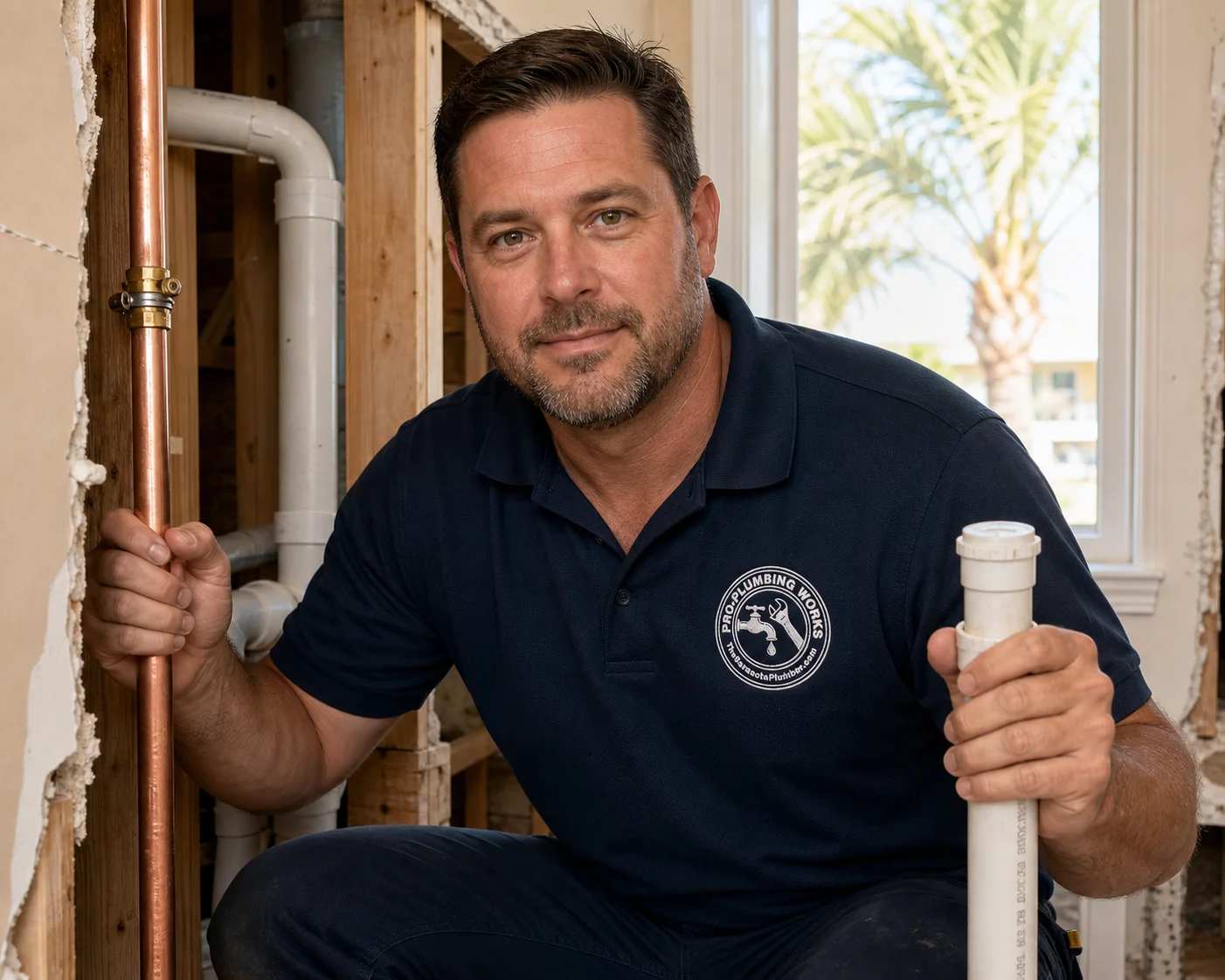
A whole-home supply repipe is typically done with PEX, although copper, CPVC and other code-approved materials may be appropriate depending on the property and scope. Material is only part of the decision; layout, supports, transition fittings, isolation valves, exterior exposure and workmanship also matter.
What is a drain, waste and vent repipe?
Drain and waste pipes generally use gravity to carry wastewater away from fixtures. Vent pipes balance air pressure in the drainage system and help protect fixture trap seals.
Drain problems can appear as:
- recurring clogs;
- gurgling;
- several slow fixtures;
- sewer odors;
- wastewater backups;
- standing water visible during a camera inspection;
- roots, scale, cracks or separated pipe.
A drain or DWV repipe does not automatically include the sewer line outside the home. The estimate should identify exactly where the replacement begins and ends.
Drain piping is larger than water-supply piping and must maintain appropriate slope and venting. Replacement can require access below slabs, inside walls, through crawl spaces or outside the building.
Can a house need one type of repipe but not the other?
Yes. The systems use different materials, operate differently and can fail independently.
A home might have deteriorated water lines but sound PVC drains. Another home might have updated supply lines above the slab while retaining older cast-iron drains below it. That is why "the house was repiped" is incomplete information during a sale or renovation.
Ask for documentation showing:
- whether supply, drain or both systems were replaced;
- which pipe sections and fixtures were included;
- the materials used;
- permit and inspection records where applicable;
- portions left in place.
How does a plumber determine what needs replacement?
For supply problems, the plumber may inspect visible pipe, measure static and flowing water pressure, isolate fixtures, check the meter and use leak-detection methods.
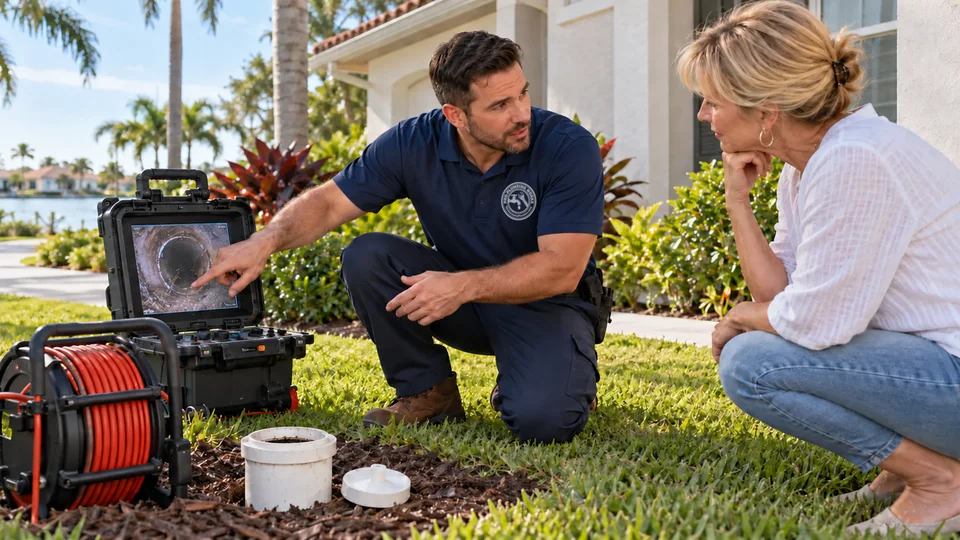
For drain problems, the plumber may evaluate fixture patterns, clean the line and perform a camera inspection. A camera cannot inspect pressurized supply lines hidden in walls, and a pressure test does not show the interior of a sewer line. Our existing guide explains what a Sarasota sewer-camera inspection can reveal.
Does repiping require opening walls or floors?
Some access is normally required, but the amount varies considerably.
Supply lines can often be routed through attics, walls and cabinets rather than following every original path. Drain replacement may require larger openings because the pipe is wider and must maintain slope. Depending on the pipe's condition and location, an under-slab drain problem may be addressed through excavation or rerouting. A camera inspection and other diagnostics can help determine the appropriate repair.
Ask the plumbing estimate to identify who handles:
- drywall openings and repair;
- paint and texture matching;
- tile, terrazzo or flooring;
- cabinetry;
- landscaping or concrete;
- dust control and site protection;
- temporary fixture outages.
Do not assume finish restoration is included unless it appears in writing.
What should a complete repiping estimate include?
A good repiping estimate should clearly spell out what's included.
- Supply piping, drain piping or both
- Included fixtures and branches
- Pipe material, size and general routing
- Valves, hose connections and appliance connections
- Water-heater connections
- Access openings and excluded finish repairs
- Permit and inspection responsibilities
- Testing and startup
- Debris removal and cleanup
- Project schedule and water shutdowns
- Product and workmanship warranties
- Change-order process for concealed conditions
Two estimates with the same total can represent very different projects. Compare exclusions and deliverables line by line.
Should you repair individual leaks or repipe the house?
One accessible failure does not always justify whole-home replacement. Repiping becomes more reasonable when failures are distributed, the piping is broadly deteriorated, repairs are becoming frequent or an upcoming renovation will already expose the system.
The decision should consider current condition, repair history, material, access, household plans and the risk of damage from another failure. A plumber should be able to explain why the recommended scope is proportional to the evidence.
How long will a repipe leave the home without water?
The answer depends on the scope and layout. Contractors commonly plan work to limit the duration of full-house shutdowns, but fixtures or rooms may be unavailable in stages. The estimate should state the anticipated schedule and whether occupants can remain in the home.
Pro-Plumbing Works provides whole-home repiping, leak detection and sewer-line repair throughout Sarasota and Manatee Counties. Call 941-894-1127 or request a free estimate.
Frequently asked questions
Does whole-home repiping include sewer pipes?
Not necessarily. In many estimates, whole-home repiping refers only to hot- and cold-water supply piping. Ask the contractor to state explicitly whether drains, waste piping and vents are included.
What is the difference between plumbing and sewer repiping?
Water-supply piping distributes pressurized potable water to fixtures throughout the home. DWV piping generally carries wastewater away by gravity and uses venting to protect trap seals. Some properties may also have pumped or pressurized wastewater components. The two systems require different diagnostic methods, materials and installation layouts.
Can you repipe a house without removing all the drywall?
Often, plumbers can use targeted openings and alternate routes, but some wall or ceiling access is generally required. The layout and pipe system determine the extent.
Should old drain pipes be replaced during a water repipe?
Only if their condition and project plans justify it. The convenience of coordinated access can be considered, but one system's age does not prove the other has failed.
Do Sarasota repipes require permits?
Whole-home supply or DWV replacement generally requires plumbing permits and inspections, although limited repair exemptions may apply depending on the property's jurisdiction, project value and exact scope. A Sarasota mailing address may fall within the City of Sarasota, unincorporated Sarasota County or another municipality. Require the estimate to identify the permitting authority and state who will obtain the applicable permits and schedule inspections.
Does a drain repipe include the exterior sewer line?
Not automatically. A drain or DWV repipe may cover only piping inside or beneath the building. The written scope should state whether the exterior sewer lateral is included and identify the termination point.