The simplest cause is a dry P-trap in an unused sink, shower, tub or drain. Run water into every seldom-used drain and check whether the odor disappears. If the fixture is used regularly or the smell returns, possible causes include drain buildup, a failed toilet seal, a faulty air-admittance valve, venting problems or a damaged drain pipe.
A sewer-like odor is not something Sarasota homeowners should simply accept as part of Florida living. Find the source rather than masking it with fragrance or repeatedly pouring chemicals into the drain.
Safety warning: A rotten-egg or sulfur-like odor can also indicate a natural-gas leak. If the smell is sudden, strong, present beyond the drain area, near a gas appliance or accompanied by hissing, leave immediately. Do not operate lights, electrical switches, appliances or phones inside the suspected area. From a safe location, call 911 and the property's gas utility. Do not continue troubleshooting the drain until a gas leak has been ruled out.
What does a P-trap do?
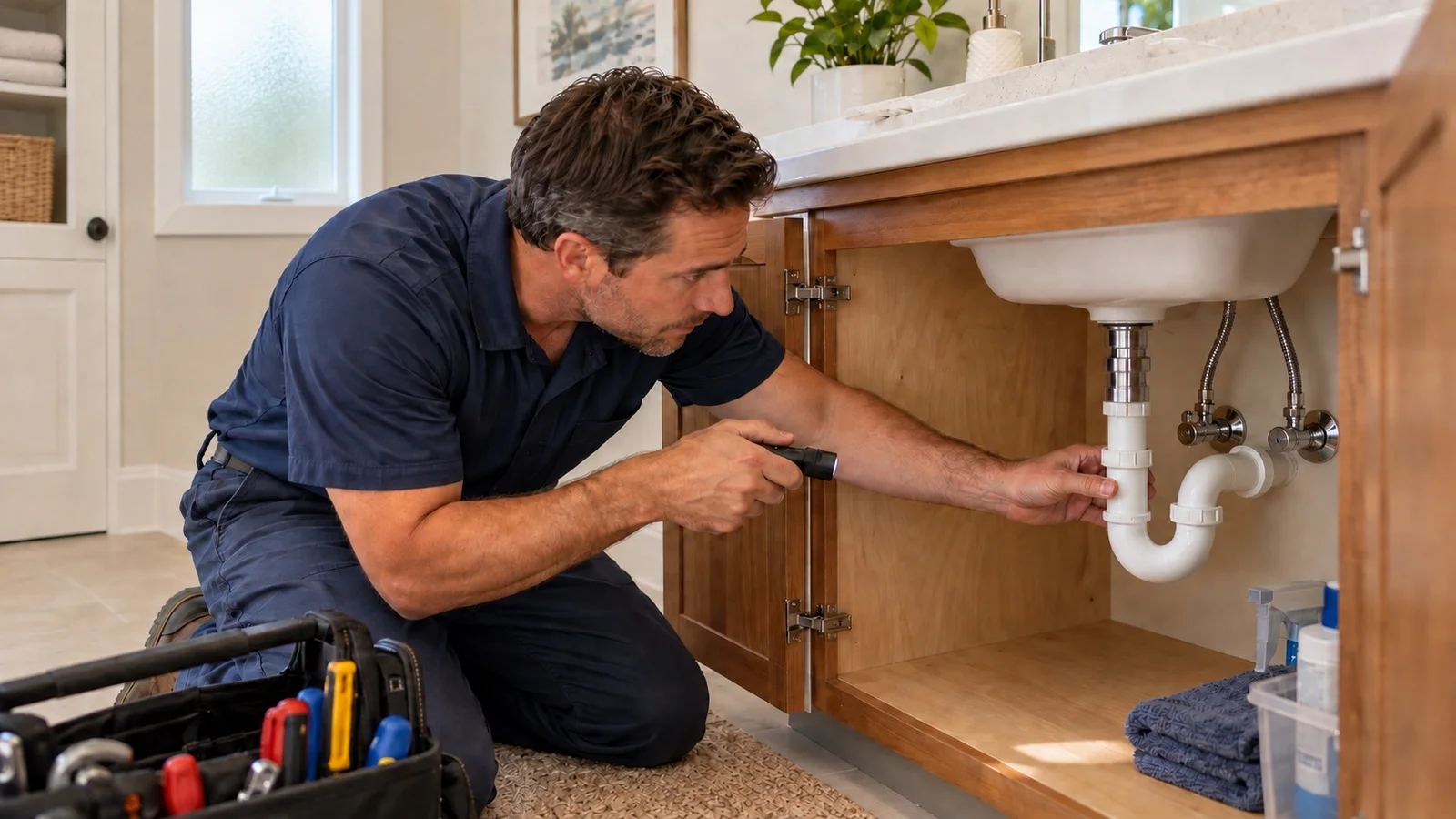
The curved section of pipe beneath many fixtures holds water after the fixture drains. That water creates a barrier between the room and the drainage system.
In a guest bath, vacant condo or seasonal home, water can evaporate from the trap. Sarasota's warm climate and long periods without use can allow trap water to evaporate.
Run enough water into each unused sink, shower or tub to refill its trap. Specialty drains may require different maintenance, so follow the drain's design instructions or ask a plumber if you are unsure. If the odor stops and stays away, evaporation was likely involved.
What if the drain is used every day?
A frequently used fixture should normally replenish its trap. If it still smells, inspect other possibilities.
Buildup in the drain or overflow
Soap, toothpaste, hair and organic residue can collect around a stopper, tailpiece or sink overflow. The odor may be coming from that buildup rather than from the sewer system.
Clean removable components using methods approved for the fixture. Avoid mixing cleaners or pouring chemicals into a drain when you do not know what is already present.
Failed or poorly configured trap
A loose joint, crack, incorrect trap arrangement or siphoning condition can prevent the water seal from working reliably. Look for moisture and visible connection problems without disassembling unfamiliar piping.
Air-admittance valve problem
Some sinks use an air-admittance valve (AAV), sometimes called a Studor vent, which lets air into the drain system while helping keep sewer gases from escaping into the home. A failed or incorrectly installed valve can allow odor into the cabinet. It must remain accessible and be correctly installed for the application.
Venting problem
Blocked, damaged or incorrectly configured venting can contribute to gurgling and loss of trap seals. Vent diagnosis may require access to roof or concealed piping and should be handled safely by a professional.
Toilet seal or flange problem
A toilet can leak sewer gas without releasing obvious wastewater. Odor near the toilet, movement at the base or staining below the bathroom can point toward a seal or flange issue.
Do not caulk over evidence of an active leak as a substitute for diagnosis.
Damaged drain or sewer piping
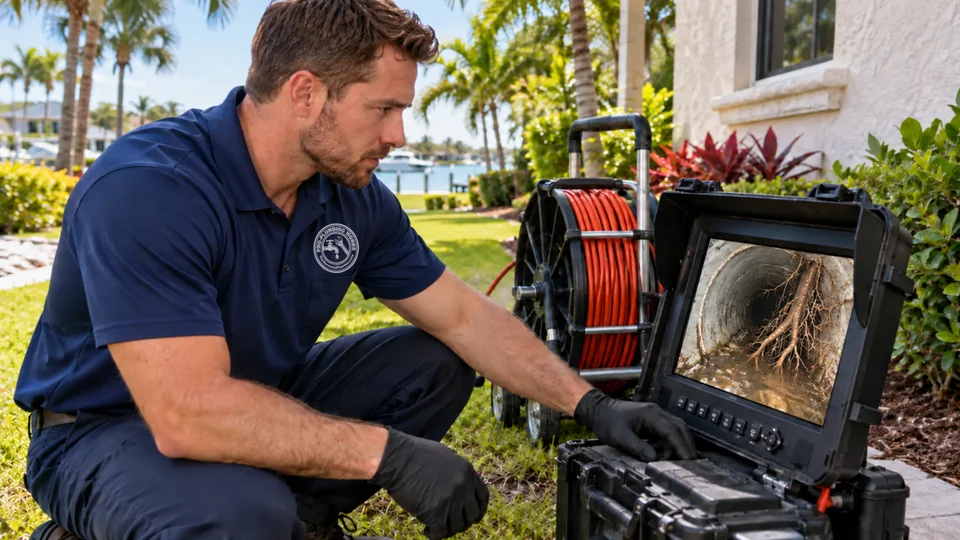
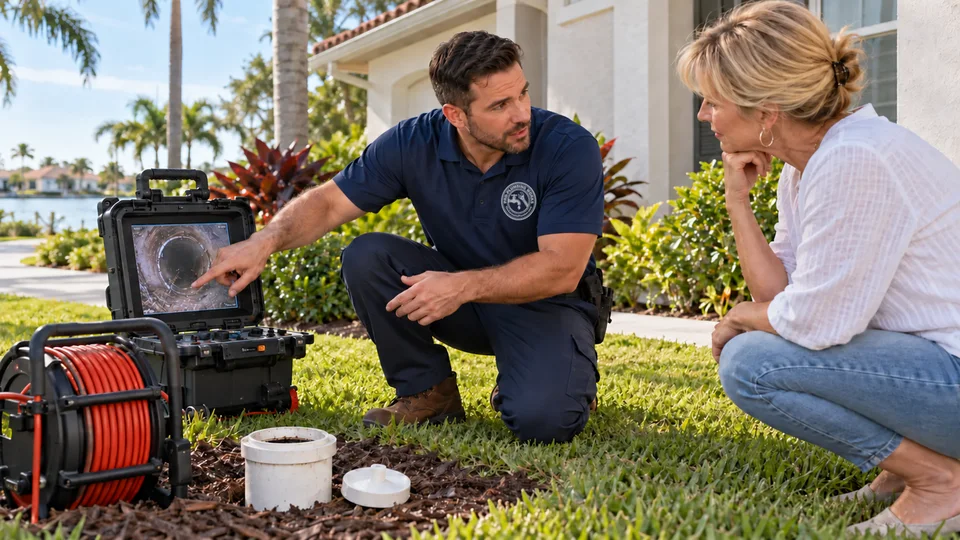
Cracks, loose cleanout caps, abandoned open connections and deteriorated drain piping can release odor. Recurring clogs, drain flies or odors in multiple rooms make broader inspection more important.
Why does the bathroom smell after the home has been vacant?
Vacancy allows water to evaporate from P-traps. It also means small leaks, failed seals and stagnant buildup may go unnoticed.
When returning to a seasonal Sarasota home:
- Ventilate the space.
- Run water in every sink, shower and tub.
- Flush each toilet and check the base.
- Refill drains.
- Look for leakage under cabinets.
- If odor remains, stop guessing and schedule diagnosis.
Is a rotten-egg smell always sewer gas?
No. Determine whether the odor comes from the drain opening or from the water itself.
- If a glass of cold water smells away from the sink, investigate the water source or treatment.
- If only hot water smells, the water heater may be involved. Review our guide to common Sarasota water-heater questions.
- If the odor remains at the drain after the water is removed, inspect the drain, trap and venting.
This simple separation can prevent replacing the wrong equipment.
Should you use bleach, vinegar or chemical drain cleaner?
Do not mix cleaning products. Some combinations release dangerous gases. Chemical drain openers may also remain in the trap and expose anyone who later disassembles the piping.
Mechanical cleaning of accessible stopper and overflow components is often more targeted for odor-producing residue. When a clog or piping defect is suspected, professional drain cleaning is safer than repeated chemical treatment. Our existing guide explains common Sarasota drain problems and professional cleaning options.
When should you call a plumber?
Arrange professional diagnosis when:
- the smell persists after all traps are refilled;
- the fixture is used daily;
- more than one room smells;
- you hear gurgling;
- a toilet rocks or leaks;
- drain flies are recurring;
- the odor is strongest inside a cabinet or wall;
- there are repeated clogs or backups;
Leave the area and seek appropriate emergency guidance if an odor is overwhelming or accompanied by physical symptoms. Do not enter confined spaces to investigate sewer gas.
Pro-Plumbing Works provides drain cleaning and inspection and leak detection throughout Sarasota and Manatee Counties. Call 941-894-1127 or request service online.
Frequently asked questions
Why does my shower drain smell even though I use it daily?
The cause may be organic buildup, a venting issue, an inadequate trap seal or damaged piping rather than simple evaporation.
Can an unused sink make the whole room smell?
Yes. When the trap water evaporates, the open path can allow drainage-system odors into the room.
Why is the smell strongest under the sink?
Inspect the trap joints, wall connection and any air-admittance valve. An unused or abandoned opening may also be present.
Can a bad toilet seal smell without leaking water?
Yes. A compromised seal can release odor before obvious wastewater appears.
Will drain cleaning eliminate sewer odor?
It can help when residue or an obstruction is the source. It will not repair a failed seal, vent defect or broken pipe.