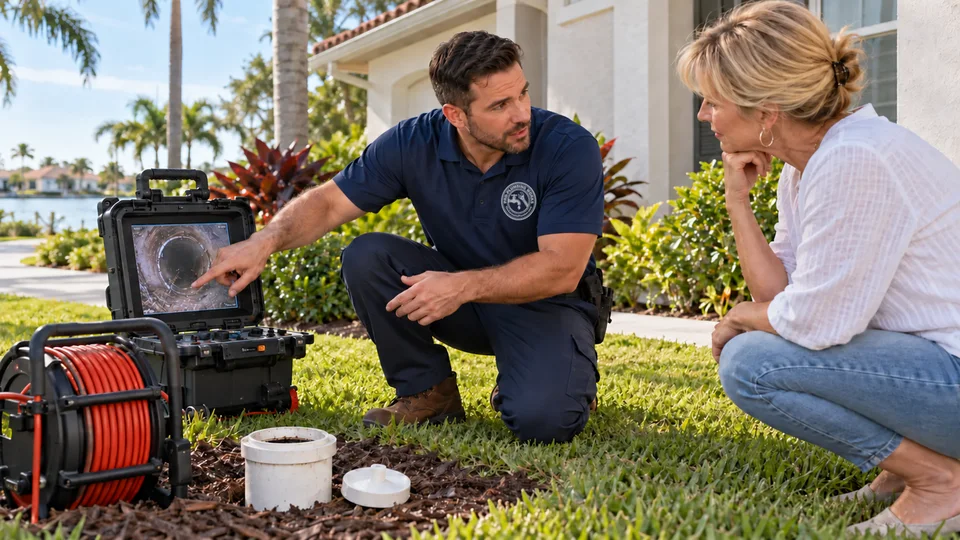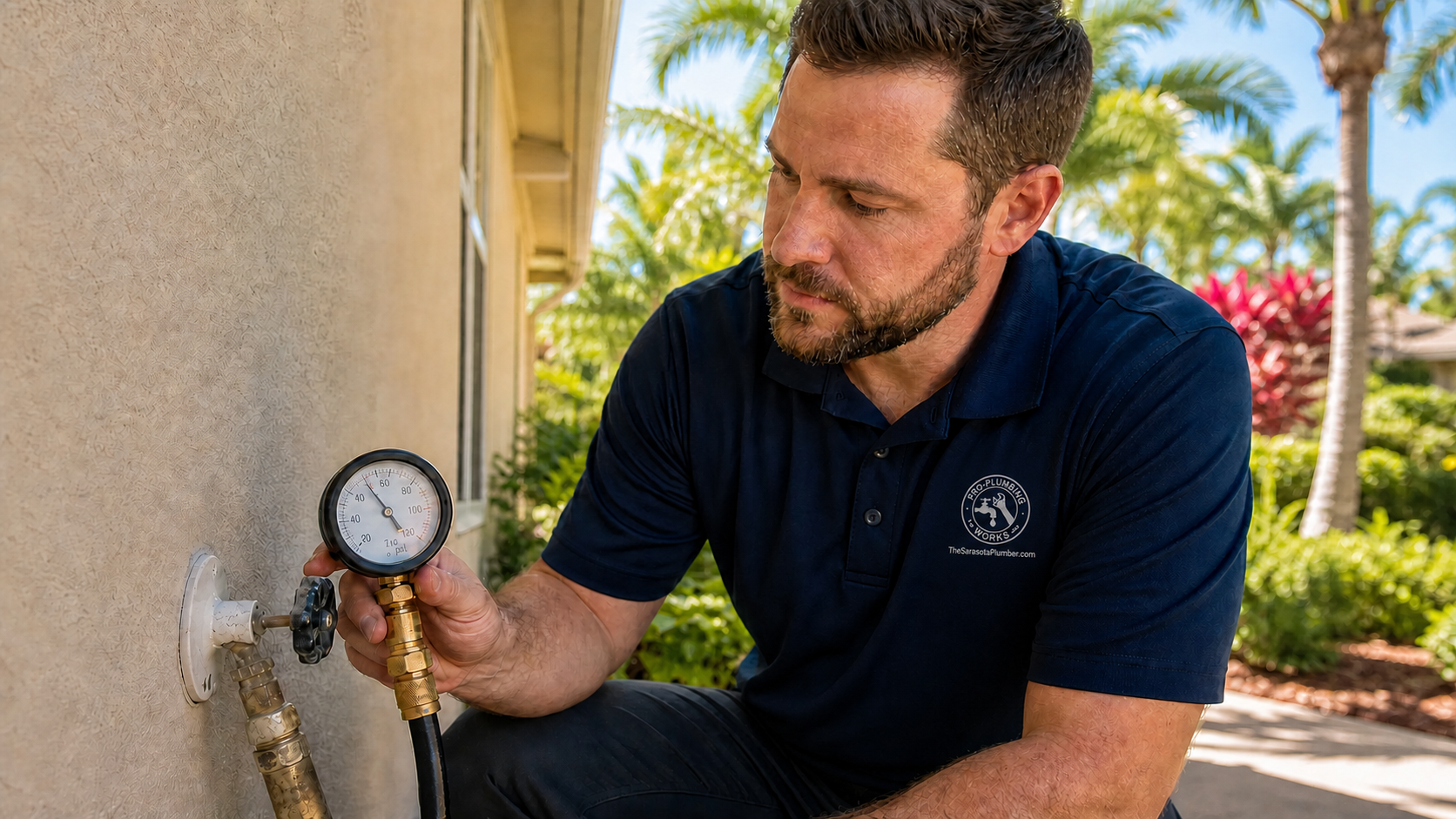
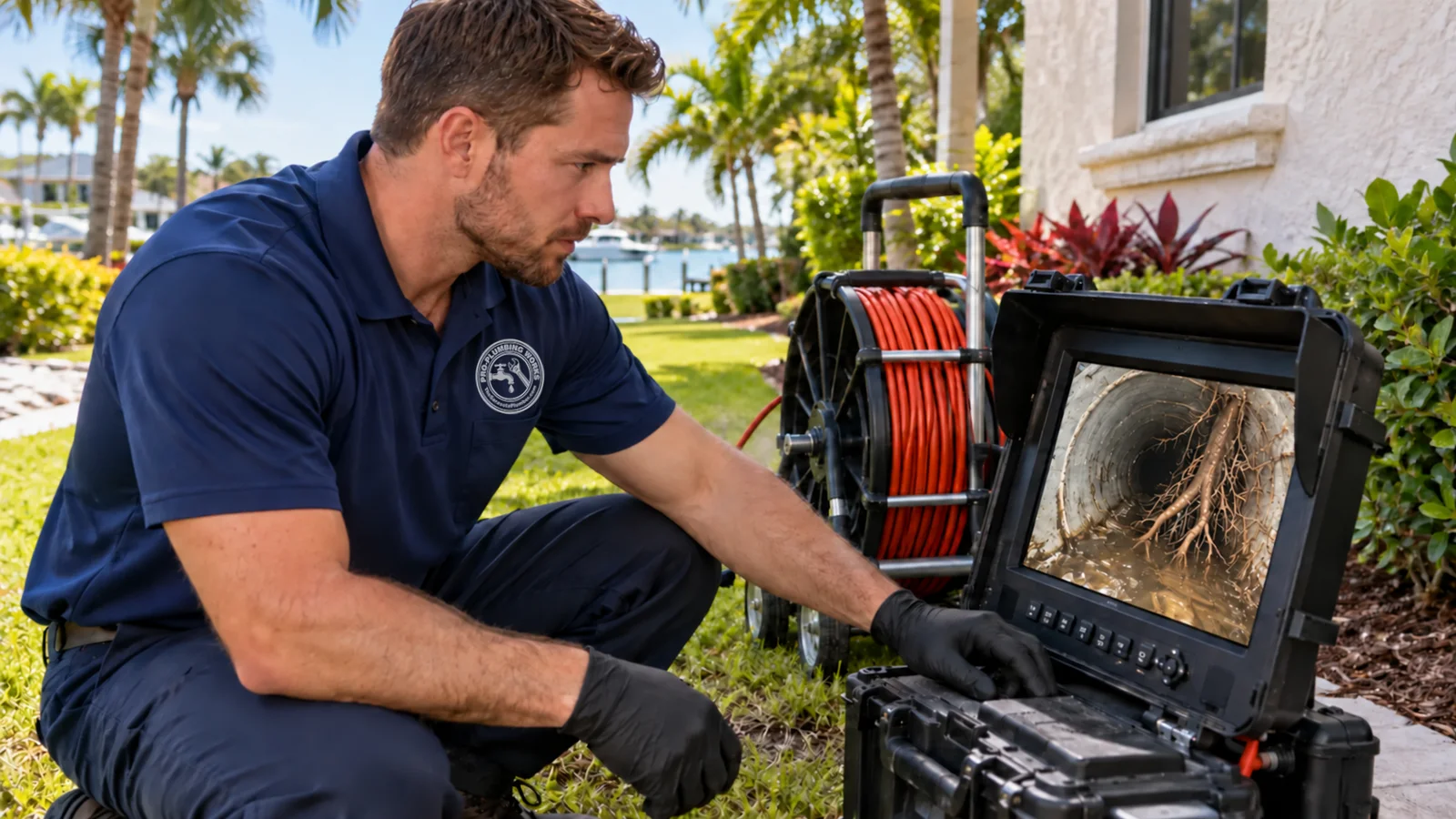
Tree roots generally enter a sewer or drain line through a crack, separated joint, failed connection or other opening. They can form a dense obstruction that catches paper and solids. Mechanical root cutting may restore flow when the pipe can safely accept the equipment, but recurring roots often signal a defect that still needs repair, rerouting or replacement. A sewer camera helps show where the intrusion is and what condition surrounds it.
Removing the blockage and correcting the entry point are related, but they are not always the same job.
What signs suggest root intrusion?
Possible clues include:
- recurring main-line stoppages;
- multiple fixtures draining slowly at the same time;
- a toilet that gurgles when another fixture drains;
- backups at the lowest fixture;
- root material recovered during cleaning;
- repeated trouble near mature trees or shrubs.
These symptoms are not proof. Grease, scale, collapsed piping, foreign objects and offsets can behave similarly. Our guide to recurring drain clogs in Sarasota explains how fixture patterns help narrow the location.
Why do roots enter a pipe?
Tree roots naturally grow toward moisture. If a sewer line has a crack, loose joint or damaged connection, roots can find their way inside. Pipes with intact, watertight joints are less vulnerable. Older materials, movement, settlement and previous repairs can create openings.
Roots should not automatically be blamed simply because a tree stands nearby. The pipe needs to be inspected.
What can a sewer camera show?
A camera inspection may identify the location and apparent severity of roots, pipe material, joints, cracks, offsets, standing water and previous repairs. The line often needs enough flow restored for the camera to travel and see the pipe wall.
Video should be interpreted with the cleaning history and symptoms. A camera cannot see through a dense blockage, and water or residue can hide defects.
How are roots removed?
The appropriate method depends on pipe size, material, condition and access. Mechanical root-cutting equipment can cut and retrieve intrusion. Hydro jetting uses high-pressure water to clear roots and remaining debris in pipes that are in suitable condition. It should not be used without evaluating pipes that are fragile, collapsed or badly separated.
Pro-Plumbing Works evaluates whether a line is a safe candidate before using aggressive cleaning. Cleaning can get wastewater flowing again, but it won't fix a damaged pipe.
Will roots grow back?
They can when the opening remains and nearby roots still have access. The return interval is unpredictable. Routine cleaning may be part of a management plan for some serviceable lines, while repeated rapid intrusion may make repair more practical.
Chemical root-control products are not interchangeable and may be regulated. Do not improvise with herbicides or pour unapproved chemicals into the drainage system.
When is cleaning enough?
Cleaning may be a reasonable immediate solution when the pipe remains structurally serviceable, access is safe and the homeowner understands the chance of recurrence. A post-cleaning camera inspection can document the restored opening and visible defects.
Ask for the location, pipe material, severity and recommended monitoring interval rather than a blanket promise that the roots are permanently gone.
When does the sewer line need repair?
Repair becomes more likely when inspection shows a collapsed section, major offset, broken connection, extensive cracking, repeated intrusion at the same defect or a line that cannot be cleaned safely.
Options can include targeted repair, rerouting or replacement. The appropriate scope depends on the actual defect, accessibility, property layout and permit requirements. See our guide to cast-iron drain problems in Sarasota for the same evidence-first approach.
Should you remove the tree?
Not automatically. Removing a tree does not repair an open joint, and trenching near established roots can affect tree health. Coordinate plumbing and arboricultural advice when a significant tree and a sewer repair occupy the same area.
The repair plan should consider the pipe route, tree location, utilities, access and future maintenance.
What should a homeowner ask after inspection?
Ask for:
- the approximate location and depth of the intrusion;
- the pipe material and diameter;
- whether flow was fully restored;
- defects visible after cleaning;
- whether the line is structurally serviceable;
- the likelihood of recurrence;
- repair or monitoring options;
- permit and restoration considerations.
How can you prepare for the service visit?
Locate accessible cleanouts without digging blindly, and do not remove a stuck cap. Write down which fixtures backed up, what was running at the time and whether the problem followed heavy rain. Gather earlier invoices, camera recordings and repair diagrams if available.
Keep children and pets away from equipment and wastewater. Clear vehicles or stored items from likely access points. Tell the plumber about irrigation, landscape lighting, gas piping or private utilities that may not appear on a public locate.
If digging is required, call Sunshine 811 before excavation. Keep in mind that private sewer lines, irrigation and landscape lighting may require separate locating.
Can landscaping prevent future root problems?
Thoughtful planting can reduce future conflicts, but it cannot repair an existing pipe defect. Before planting a large tree, consider its mature size and distance from private sewer and water lines. If the route is unknown, locate the plumbing rather than estimating from where the cleanout appears.
When repair excavation is planned near a valuable tree, coordinate the pipe route and root protection. Cutting major structural roots can affect tree stability, while moving the repair without considering slope may create a plumbing problem.
What should a repair proposal explain?
The proposal should identify the defect being corrected, access method, affected surfaces, permit responsibility, pipe material, connections, cleanouts and restoration limits. If periodic cleaning is recommended instead, ask what findings make monitoring reasonable and which symptoms should trigger another inspection.
Root removal should never be presented as proof that the pipe is now sealed. The post-cleaning condition is what guides the next decision.
What does heavy rain tell you?
Rain does not make tree roots suddenly appear inside a sound pipe, but saturated soil, groundwater entry or an overloaded public system can change how symptoms present. Tell the plumber whether backups occur only during storms or also in dry weather. The timing helps distinguish a private restriction from a broader collection-system condition.
Do not open an exterior cleanout while wastewater is under pressure. Sewage can discharge suddenly. If multiple nearby properties are affected, contact the serving utility as well as protecting the home from continued fixture use.
Is preventive camera inspection worthwhile?
It may be useful after documented root removal, before a major landscape project or when buying a property with a history of main-line trouble. It is less useful as a stand-alone promise that no future problem can occur. A camera inspection shows the pipe's condition at the time of service, but it can't reveal damage hidden by standing water or debris.
Pro-Plumbing Works provides drain root removal, camera inspection and sewer-line service throughout Sarasota and Manatee Counties. Call 941-894-1127 or request service online.
Frequently asked questions
Can roots enter PVC sewer pipe?
They can enter through a failed joint, crack or damaged connection. The material alone does not prove the line is defect-free.
Will hydro jetting kill tree roots?
Jetting can remove some material in suitable piping, but it does not seal the opening that allowed roots to enter.
Can a camera inspect a fully blocked line?
Visibility and travel may be limited until enough of the obstruction is cleared.
How quickly do roots return?
There is no universal timetable. It depends on the remaining opening, vegetation, moisture and how completely the intrusion was removed.
Does one root blockage mean the whole line needs replacement?
No. The camera findings, pipe condition, defect location and history should determine the scope.