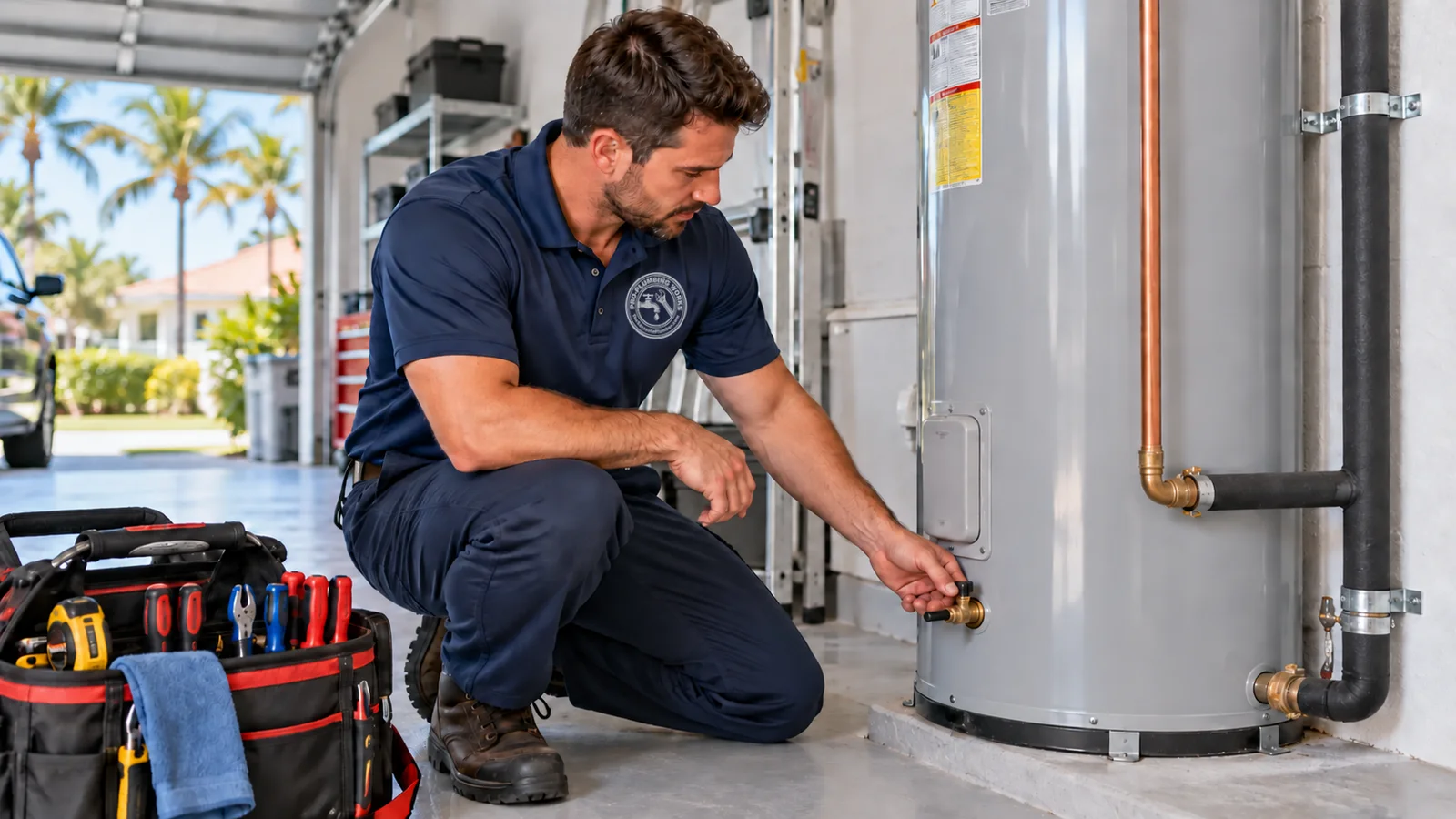
Water-heater maintenance should follow the manufacturer's instructions and the unit's condition. A tank system may need inspection of leaks, connections, the drain valve, temperature-and-pressure relief system and the recorded age of the sacrificial anode, with controlled sediment flushing when appropriate. Tankless maintenance may include cleaning an inlet filter and descaling the heat exchanger when required. Gas equipment also requires combustion and venting checks by a qualified professional.
There is no safe universal instruction to “flush every heater once a year.” Age, design, water chemistry, service history and existing corrosion affect the right approach.
Why does Sarasota water affect maintenance?
Minerals can leave scale or sediment inside water-heating equipment. The amount varies by source, treatment and property. Scale can reduce heat transfer, restrict passages and contribute to noise, but a white deposit does not by itself prove the water is unsafe.
Review our guide to Sarasota water testing and TDS before treating one handheld reading as a diagnosis.
What should be inspected on a tank water heater?
A service visit may include:
- checking the tank and nearby area for moisture or corrosion;
- inspecting accessible water and electrical or gas connections;
- reviewing temperature setting and delivered-water temperature;
- checking the drain valve condition;
- evaluating the temperature-and-pressure relief valve and discharge piping;
- checking the sacrificial anode’s age;
- assessing sediment and whether flushing is appropriate;
- confirming safe clearances and access.
The relief valve is a safety device. Do not cap it, plug its discharge pipe or operate it without understanding the manufacturer's procedure and the risk of hot water discharge.
Should every tank be flushed?
Flushing can remove loose sediment, but it must be done safely. An old drain valve may not reseal, and a neglected tank with advanced corrosion may begin leaking after it is disturbed. That does not mean flushing caused sound metal to fail; it means condition matters before maintenance begins.
A plumber should evaluate older or unknown equipment before aggressive flushing.
What does the anode rod do?
Many tank water heaters use a sacrificial anode to help protect steel from corrosion. Anodes are not identical, and some units use powered systems or designs with limited access.
We check the anode rod’s age and let you know if it is due for replacement.
How is tankless maintenance different?
Tankless units can accumulate scale in narrow heat-exchanger passages. Maintenance may include cleaning the inlet filter, checking error history, inspecting condensate components on condensing models and circulating an approved descaling solution according to the manufacturer.
The service interval is not the same for every home. Review our comparison of tank and tankless water heaters in Sarasota for broader selection factors.
What temperature should the heater use?
Water-heater temperature involves a balance between comfort, energy use, controlling bacteria and reducing scald risk. Do not change it based on a single generic number. The EPA notes that higher water temperatures can help control Legionella but can also increase the risk of scalding at fixtures.
Households with children, older adults or people with reduced sensation need particular care. A plumber can measure delivered temperature and review mixing or tempering options where appropriate.
What warning signs need service now?
Schedule evaluation when you notice:
- water beneath or around the heater;
- rust-colored water from hot fixtures;
- repeated breaker trips or error codes;
- popping, rumbling or unusual operation;
- unstable hot-water temperature;
- a leaking relief valve;
- scorch marks, soot or combustion odor;
- damaged venting or a gas smell.
If you smell gas, leave the area and follow the gas utility's emergency instructions. Do not operate switches or continue troubleshooting indoors.
Can maintenance prevent every failure?
No. Maintenance can identify problems, support efficiency and reduce avoidable wear, but it cannot restore a perforated tank or guarantee against failure. Ask for the condition findings, the recommended work and the reason for each recommendation.
What records should homeowners keep?
Record the model and serial number, installation date, service dates, replaced parts, error codes and any water-treatment changes. Photographs of labels and accessible connections can help when arranging service.
How should seasonal residents prepare?
Long periods away can hide slow leaks and make a small problem more damaging. Before leaving a Sarasota property, review the manufacturer's vacation guidance, arrange appropriate property checks and confirm that shutoff decisions are compatible with the heater and any recirculation or treatment equipment.
Do not simply switch off equipment or close valves without understanding the system. Some heaters, pumps and treatment devices require a specific shutdown and restart sequence. When returning, inspect the area before restoring power or fuel.
What affects the maintenance interval?
Useful factors include:
- heater type and manufacturer instructions;
- installation date and prior service;
- household hot-water demand;
- measured water conditions;
- filtration or softening equipment;
- visible sediment, noise or error history;
- the anode rod’s recorded age on applicable tanks;
- accessibility and condition of valves.
Service recommendations should connect to one of those factors. That’s why a maintenance schedule should take the actual water heater and its condition into account.
What should a maintenance visit document?
Ask for the observed condition, work performed, temperature measurements, parts replaced and any limitations. If replacement is recommended, request the specific finding behind it, such as a leaking tank body, unavailable safety component, unsafe venting or repeated control failure.
Maintenance and replacement are different decisions. A service visit should not use age alone as proof that a functioning unit must be removed, but age and condition can affect the risk and value of further repair.
What should you inspect between service visits?
Look at the floor and accessible connections without removing covers. Watch for moisture, rust trails, bulging, scorch marks, damaged insulation or a relief discharge pipe that has been altered. Keep storage away from the heater and maintain the clearances stated by the manufacturer.
Test hot-water performance by noting changes, not by touching very hot pipes or opening safety components. Record repeated error codes before resetting the unit. A reset that temporarily restores operation does not correct the cause.
For heaters in garages, make sure vehicle movement and stored items cannot strike the equipment or piping. For units in closets or interior spaces, a small leak can travel into finished areas, so a suitable drain pan and leak alert may provide useful early warning where the installation allows.
Pro-Plumbing Works provides water-heater maintenance and water-heater repair throughout Sarasota and Manatee Counties. Call 941-894-1127 or request service online.
Frequently asked questions
How often should a Sarasota water heater be serviced?
Use the manufacturer's schedule as the starting point, then adjust for equipment type, water conditions, age and service findings.
Is popping noise always dangerous?
No. Sediment and heating behavior can create noise, but new or severe sounds should be evaluated with the unit's overall condition.
Can I test the relief valve myself?
Follow the manufacturer's instructions and understand that very hot water may discharge. If the valve or piping is corroded or unfamiliar, use a qualified professional.
Does a softener eliminate water-heater maintenance?
No. Treatment may change mineral behavior, but the heater still has safety components, connections and manufacturer maintenance requirements.
When should a leaking tank be replaced?
A tank leaking from its body is generally not repairable. First confirm the water is not coming from a valve, connector or nearby source.